Which Phone Accessories Are Safe to Buy Used (and Which Aren't)

Which Phone Accessories Are Safe to Buy Used (and Which Aren’t)

Somebody bought a power bank secondhand for a fraction of retail, used it for a fortnight, and then noticed the casing had developed a slight curve. Not a dent — a bulge, from the inside.

That’s a swollen lithium cell, and it’s the point at which an accessory stops being a bargain and becomes something you carry carefully to a recycling point.

Accessories are the part of the used market where the sensible answer varies wildly by category, and where most advice treats them as one undifferentiated pile. They aren’t. One question sorts nearly all of them.

The question that decides it

Does it contain a battery, and does it touch mains electricity?

Batteries are consumable. They degrade whether the item is used or sitting in a drawer, they can’t be assessed by looking, and when they fail badly they fail in ways that involve heat.

Mains voltage is the other axis. Anything that plugs into a wall socket is separating you from household current using components you can’t inspect, and that separation is exactly what counterfeit manufacturers economise on.

Everything else — the passive stuff, the cables, the plastic — is essentially risk-free secondhand.

CategoryBattery?Mains?Verdict
Cases, covers, skinsNoNoBuy freely
Wired charging cablesNoNoBuy freely, from known brands
Sealed screen protectorsNoNoBuy freely
Docks, stands, mountsNoNoBuy freely
Wired earphonesNoNoBuy freely, replace the tips
Wall chargers and adaptersNoYesBuy carefully, brand matters
Wireless charging padsNoYesTest on the spot
Memory cardsNoNoVerify real capacity
SmartwatchesYesNoBuy carefully, check locks
Game controllers, keyboardsYesNoBuy carefully
True wireless earbudsYesNoBuy at a price assuming worn batteries
Power banksYesNoAvoid

Buy freely: the passive category

Cases and covers. A two-year-old case is a two-year-old case. Check for cracks at the corners and whether the lip around the camera is intact, and you’re done. This is the single best value in the accessory market, since cases lose most of their price the moment they leave the shop.

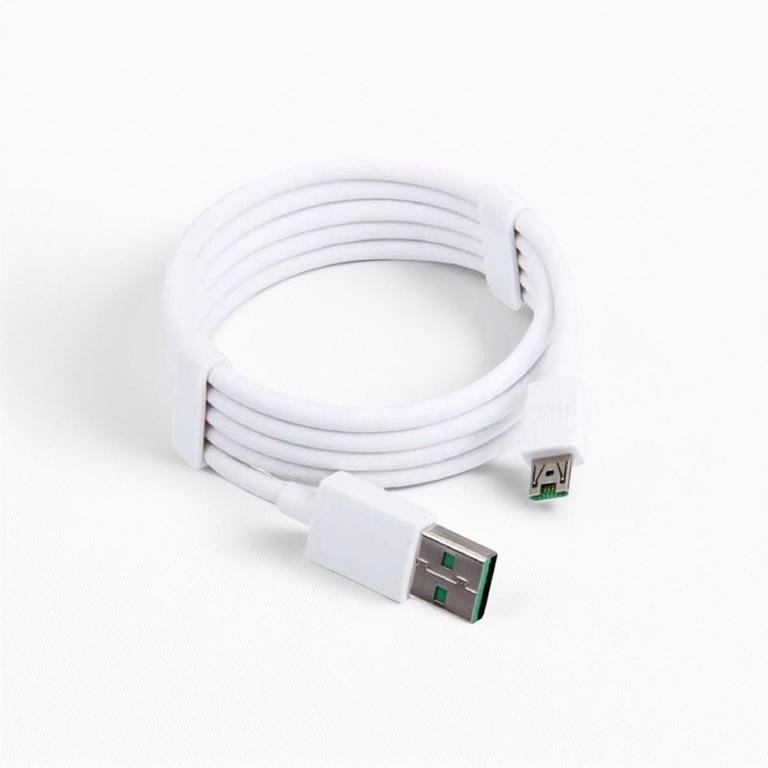
Cables. From a recognisable brand, a used cable is fine. Look at the strain relief where the cable meets each connector — that’s where they fail — and check the connector itself for bent pins or corrosion. A cable that charges and transfers data today will do so for years.

Docks, stands, car mounts, tripods. Passive hardware. Check the clamp tension and whether adhesive mounts still hold, and buy without concern.

Wired earphones. Perfectly reasonable used, with one condition: buy new ear tips. They cost very little and the alternative is unappealing.

Sealed screen protectors. If the packaging is unopened, there’s nothing to go wrong. An already-applied protector, obviously, has no resale value at all.

Buy carefully: mains and moving parts

Wall chargers. The category where brand matters most. A genuine adapter from a manufacturer or a reputable third party is fine used — there’s no consumable inside. A no-name high-wattage adapter is a different proposition, because counterfeit units routinely economise on the isolation between mains voltage and the low-voltage output, which is the component doing the safety work.

Our guide to identifying fake chargers and cables covers the specific tells. The short version: weight, print quality, certification marks that require actual testing, and pin quality.

Wireless charging pads. Test on the spot with your own phone. Coils fail, and a pad that looks perfect can simply not work. Bring the phone you’ll use it with, since alignment and power delivery vary between models.

Memory cards. Two problems, both invisible. Flash memory wears with writes, so a heavily used card can be near the end of its life while appearing fine. More common: counterfeit cards with firmware that reports a large capacity while containing far less, which appear to work until you fill them and discover your files have quietly overwritten each other.

If you buy one used, run a capacity verification tool that writes and reads back the full card before you trust it with anything. It takes time and it’s the only way to know.

Game controllers and Bluetooth keyboards. Batteries inside, but usually larger and less stressed than earbud cells. Check runtime claims against reality if you can, and check that every button and stick registers.

Buy at a discount that assumes the worst

True wireless earbuds. The cells are tiny, non-replaceable, and degrade faster than phone batteries. A three-year-old pair frequently runs a fraction of its original time between charges, and there’s no fixing that.

If you want them used, price them as though the batteries are near the end, because they might be. Check both buds independently — one failing before the other is the classic pattern — and check the case charges both. Then replace the ear tips.

Counterfeits are also rife in this category, more so than in almost any other. Our guide to checking used earbuds and smartwatches covers verification.

Smartwatches. Worth buying used, with a significant caveat: they carry account locks in the same way phones do. A watch that hasn’t been properly unpaired from its previous owner’s account can be unusable, and no amount of resetting fixes it.

Avoid: power banks

The one category I’d tell people to skip outright.

A power bank is a battery in a shell, and everything wrong with buying a used battery applies. Capacity falls with cycles, so a unit that’s been through a few hundred charges delivers noticeably less than the number printed on the case — which was optimistic to begin with.

The safety point matters more. A swollen cell is a genuine hazard rather than a cosmetic complaint, and swelling isn’t always visible until it’s pronounced. Any bulge in the casing, any seam that has opened slightly, any panel that no longer sits flush: stop using it, don’t charge it, and take it to an electronics recycling point.

New power banks from reputable brands are inexpensive. The saving on a used one is not worth the category of risk it introduces.

Where the money actually is

Worth being concrete about which categories reward buying used and which don’t, because the discounts vary enormously.

Cases are the standout. They lose almost all their value the moment they’re opened, so a barely used case from a good brand costs a fraction of retail and performs identically. If you buy one thing secondhand in this category, buy cases.

Docks, mounts, and stands follow the same logic. Nobody wants a used car mount, which is exactly why they’re cheap and exactly why they’re a good buy.

Cables and chargers offer moderate savings. Genuine ones hold value reasonably well used, and the discount isn’t always big enough to justify the verification effort — but it’s real on higher-wattage adapters.

Wearables offer large discounts and carry the most conditions attached, which our wearables checklist works through.

Memory cards offer discounts that look attractive and frequently aren’t, once you account for the risk of a counterfeit and for flash wear you can’t see.

The pattern: the best secondhand value sits in items that are expensive new, cheap used, and impossible to get wrong. Cases and mounts win on all three.

Hygiene, briefly

Not the most interesting section, and worth a paragraph.

Anything that goes in or on your body — ear tips, wrist bands, headband cushions — should be replaced rather than cleaned, and they’re inexpensive enough that this isn’t a real cost. Cases and phones can be wiped down with an appropriate cleaner; avoid anything abrasive on coated surfaces or screens.

For earbuds specifically, the mesh over each driver collects things you’d rather not think about. Check it before buying, and factor replacement tips into the price without embarrassment — every experienced buyer does the same.

Bundled accessories deserve their own scepticism

Here’s a pattern worth knowing when buying a used phone.

Phones frequently arrive with a charger and cable that aren’t the ones they shipped with, because the originals were lost and replaced cheaply at some point. The phone can be entirely genuine while the adapter in the box is a counterfeit.

So value bundled accessories at zero unless you can verify them, and inspect any included charger separately from the phone. A genuine device with a fake adapter is a common combination and the adapter is the part that can damage the phone you just bought.

A quick pre-purchase checklist

  1. Does it contain a battery? If yes, price it as a consumable.
  2. Does it plug into mains? If yes, brand and certification marks matter more than price.
  3. Can you test it now? Wireless pads, controllers, and earbuds should be tested at the meetup.
  4. Is the capacity claim verifiable? Memory cards need a full write-read check.
  5. Is anything swollen, bulging, or not sitting flush? Walk away.
  6. Are the connectors clean and straight? Bent pins and corrosion mean intermittent use ahead.
  7. Do the ear tips or wrist bands need replacing? Budget for it — they’re cheap.

Common mistakes to avoid

  • Treating accessories as one category. A used case and a used power bank are not the same decision.
  • Buying a no-name high-wattage charger secondhand. The one accessory that can damage your phone.
  • Trusting a memory card’s stated capacity. Verify by writing to it fully.
  • Assuming an included charger is genuine. Often it isn’t, and it’s rarely mentioned.
  • Buying earbuds at near-new prices. The batteries have been running the whole time.
  • Ignoring a slight bulge in a power bank. That’s the warning, not a cosmetic flaw.
  • Skipping a test on wireless charging pads. They fail silently.

FAQ

Is it safe to buy a used charger?

From a recognisable brand, yes — there’s no consumable component inside. From an unbranded source, particularly at high wattage, the risk isn’t worth the saving, because counterfeit adapters commonly cut costs on the electrical isolation.

Why shouldn’t I buy a used power bank?

Capacity has already degraded, the degree is unknowable from outside, and a swollen cell is a real hazard. New units from reputable brands cost little enough that the saving doesn’t justify it.

Are used AirPods or other true wireless earbuds worth buying?

Only at a price that assumes the batteries are worn, since the cells are tiny and can’t be replaced. Test both buds separately and budget for new ear tips.

How do I know a used memory card is genuine?

Run a capacity verification tool that writes data across the whole card and reads it back. Counterfeit cards report a false size and silently lose data once you exceed their real capacity.

Can I test a used memory card at the meetup?

Not properly — a full write-and-read verification takes considerable time. Either buy from someone who’ll accept a return, or treat the card as unverified until you’ve run the check at home and keep nothing important on it until then.

Do used cases and cables lose anything with age?

Cases essentially don’t. Cables fail at the strain relief near the connectors, so check both ends — but a cable working today will generally keep working.

Are used chargers from a phone manufacturer safe?

Yes. A genuine adapter contains no consumable part, so age barely matters. The concern in this category is counterfeits, not wear.

Should I buy the accessories bundled with a used phone?

Treat them as a bonus valued at zero unless you can verify them. Bundled chargers are frequently replacements of unknown origin rather than the originals.


Before buying any accessory secondhand, ask the battery question first and the price question second. It sorts almost everything, and it’s the reason a used case is an obvious buy and a used power bank isn’t.

Looking for accessories now? Browse what’s listed on ExploreFrag — and if you’re selling a phone, our bundling guide covers which extras actually raise your price.


About the author

Emran Ahmed is the founder and CEO of ExploreFrag, a marketplace for buying and selling used phones and accessories across every brand. The swollen power bank in the opening was brought to his attention by a buyer who wanted to know whether it was normal. It was not. He now sorts every accessory question by whether the thing contains a battery, which turns out to answer most of them.

Best Accessories to Bundle When Selling Your Phone

Best Accessories to Bundle When Selling Your Phone

Two listings for the same phone in the same week. One included the original box, the original cable, and the unopened screen protector the owner had bought and never applied. The other included a drawer’s worth of extras — three cases, two unbranded cables, a car mount, and a used screen protector still on the phone.

The first sold faster and for more. The second read like someone clearing out a cupboard, which is roughly what it was.

Bundling works when it removes doubt and fails when it adds clutter. Knowing which is which is worth real money on every sale.

What actually raises the price

The original box. The most reliable value-add in the entire used market, and it costs you a trip to a cupboard. A boxed phone signals a careful owner, gives the buyer a matching IMEI to verify against, and makes the whole listing read as legitimate. Our guide to what affects resale value puts this near the top of the things you can actually control.

The original cable and adapter. Specifically the originals. Their value isn’t the twenty dollars of hardware — it’s that a complete package tells the buyer nothing was lost, replaced, or improvised over the phone’s life.

An unused, still-sealed screen protector. Cheap for you, immediately useful for them, and it costs nothing to keep in the box.

The SIM tool and any paperwork. Trivial individually. Together they complete the picture.

A case in genuinely good condition, ideally one that matches the phone. Buyers appreciate not needing to buy one on day one, and a case that’s been protecting the phone is evidence the phone was protected.

Notice the pattern: everything on this list either verifies something or completes something. That’s what buyers pay for.

What’s worth more sold separately

The mistake sellers make in the other direction.

Good earbuds. A decent pair has its own buyer and its own price. Folding them into a phone listing means the buyer values them at near zero, because they came free.

Quality chargers, particularly high-wattage or multi-port units. These sell perfectly well on their own.

Magnetic accessories, stands, and docks. Separate market, separate buyer.

Smartwatches. Definitely separate. Bundling a watch with a phone narrows your buyer pool to people who want both, which is a much smaller group than people who want either.

The rule of thumb: if an accessory would attract its own buyer at a meaningful price, sell it separately. Bundling is for things that complete the phone, not for things that have value in their own right.

What to leave out entirely

Used screen protectors. Peel them off or leave them on, but don’t list them as an inclusion. Nobody has ever paid extra for a protector someone else applied.

Worn cases. A case with cracked corners and stretched edges makes the listing look tired.

Unbranded chargers of unknown origin. This is the one that can genuinely cost you. If you’re not certain a charger is genuine, don’t include it — you’d be handing a stranger something you haven’t verified, and our guide to identifying fake chargers explains why that category is different from the rest.

Used ear tips, old cables with damaged strain relief, random adapters. Clutter. Every extra item in a listing photo that isn’t adding value is diluting the ones that are.

Anything with a swollen battery. Obviously, and it happens — old power banks get thrown into bundles without a second look.

ItemBundle itSell separatelyLeave out
Original box
Original cable and adapter
Sealed screen protector
SIM tool, paperwork
Good-condition case
Quality third-party charger
Earbuds
Smartwatch
Docks, stands, magnetic accessories
Used screen protector
Worn or cracked case
Unverified charger
Old power bank

How to present a bundle

List the contents exactly. Not “comes with accessories” — name each item. Vague inclusions get valued at zero because the buyer assumes the worst.

Photograph the bundle laid out. One shot, everything visible, on the same plain background as the phone photos. It takes thirty seconds and it converts a claim into evidence.

Say whether the charger is the original. This is the single most useful sentence you can add. Sellers rarely volunteer it, buyers frequently wonder, and the honest answer costs nothing.

Don’t inflate the price for the bundle. Price the phone at the market rate and let the accessories be the reason a buyer picks your listing over the four others they’re comparing. In a crowded market — the weeks after a major launch, when everyone is selling the same model — that’s exactly the edge you need, as our timing guide explains.

The one exception worth making

If the phone is at the very bottom of the market — an old device worth relatively little — bundling everything is the right call.

At that price point buyers aren’t optimising. They want a working phone with the bits to run it, and a complete package moves faster than a bare one. The accessories have almost no separate value at that level anyway, so folding them in costs you nothing and shortens the sale.

The separate-sale logic applies to phones with real value, where a buyer is comparing carefully and where the accessories genuinely have their own market.

Pricing the bundle without overreaching

The temptation is to add up what the accessories cost and add that to the phone price. It doesn’t work, and here’s why.

Buyers price phones against other phones. When they compare four listings for the same model, they’re looking at the price first and the details second. A listing priced above the others because it includes extras gets filtered out before anyone reads what the extras are.

The bundle’s job is different: it wins the comparison between listings at similar prices. Same money, more included, obviously better — and it converts a hesitant buyer into a message.

So price the phone at the market rate, list the inclusions clearly, and let the completeness do the work. If you genuinely want to monetise valuable accessories, sell them separately as their own listing rather than trying to recover their cost inside the phone’s price.

One exception: when you have the full original package — box, original cable, original adapter, all present — you can justifiably sit slightly above bare listings, because a complete, boxed, verifiable phone is a different product from a bare one. That’s not charging for accessories; it’s charging for the certainty they represent.

A pre-listing gather

Ten minutes, once, before you photograph anything.

  1. Find the box. Check the IMEI printed on it matches the phone.
  2. Find the original cable and adapter. Confirm they’re the originals, or note that they aren’t.
  3. Check any charger you’re including is genuine — weight and print, at minimum.
  4. Find the SIM tool and any paperwork that came with the phone.
  5. Look for unopened screen protectors you bought and never used.
  6. Pick the best-condition case, and set the worn ones aside.
  7. Check nothing in the pile is swollen, frayed, or damaged.
  8. Lay it all out and take one photograph.

That list is the difference between a listing that reads as a complete package and one that reads as a phone plus whatever was lying around.

What buyers actually ask for

From the pattern of questions sellers receive, in rough order of frequency:

  1. Is the charger included, and is it the original?
  2. Do you have the box?
  3. Is there a case with it?
  4. Does it come with a screen protector already on?
  5. What condition is the cable in?

Four of those five are answered by the bundle. Putting the answers in the listing removes a round of messages and, more usefully, removes the suspicion that fills the gap when a listing doesn’t say.

What to do when the box is long gone

Common, and not fatal.

Say so directly. “No original box” in the listing is better than silence, because buyers who care will ask anyway and buyers who don’t won’t mind.

Compensate with documentation. A boxed phone’s real value is verification, so supply that another way — the IMEI in the listing, a battery health screenshot, the parts history screen, a purchase receipt if you have one. Our listing guide covers which screenshots do the most work.

Don’t substitute a generic box. Putting the phone in a different manufacturer’s packaging, or a box from another model, reads as deception even when it isn’t intended that way.

Adjust the price rather than arguing about it. The absence of a box is a small, real discount. Accepting it up front is faster than negotiating it at the meetup.

And for next time: keep the box. It takes up very little space and it’s the cheapest thing you’ll ever do for your resale price.

Timing your bundle to the market

One refinement worth knowing.

In a crowded selling period — the weeks after a major launch, when dozens of identical models appear at once — a complete bundle is worth more than usual, because buyers have real choice and are looking for tiebreakers. That’s the moment to include everything and photograph it well.

In a thin market, when few comparable phones are listed, the bundle matters less. Buyers have fewer alternatives and are choosing on price and condition. That’s the moment to consider selling the valuable accessories separately, since your phone will sell regardless.

Same accessories, different strategy, depending on how much competition your listing has. Checking how many comparable phones are currently listed takes about a minute and tells you which situation you’re in.

Common mistakes to avoid

  • Bundling valuable accessories. Earbuds and watches attract their own buyers at their own prices.
  • Listing “accessories included” without naming them. Unnamed inclusions are valued at zero.
  • Including a charger you can’t verify. The one bundle item with a downside beyond wasted effort.
  • Adding a used screen protector to the list. It isn’t an inclusion, it’s a fact about the phone.
  • Pricing the bundle above market. The extras win the comparison; they don’t raise the ceiling.
  • Photographing accessories separately from the phone. One laid-out shot works better than five individual ones.
  • Throwing in an old power bank. Check it isn’t swollen before it goes anywhere near a buyer.

FAQ

Does including the original box really increase the price?

Consistently, and it’s the cheapest thing you can do. It signals a careful owner, lets the buyer match the IMEI, and makes the listing read as a legitimate private sale.

Should I include my case and screen protector?

A good-condition case, yes. A screen protector already applied isn’t an inclusion — it’s part of the phone’s condition. A sealed unused one is worth mentioning.

Is it better to sell accessories separately?

For anything with its own buyer and its own price — earbuds, quality chargers, watches, docks — yes. For items that complete the phone, bundle them.

What if I don’t have the original charger?

Say so plainly. Buyers mind an honest “the original charger was lost, this is a replacement” far less than discovering it themselves, and it takes one sentence.

Do bundles help a phone sell faster?

Particularly in crowded periods, when buyers are comparing several near-identical listings and looking for a reason to pick one.

Should I bundle everything on a cheap old phone?

Yes. At the bottom of the market the accessories have little separate value and a complete package sells faster.


Go and find the box before you write anything else. It’s ten minutes of searching for the most reliable price increase available to you, and it makes every other part of the listing more credible.

When you’ve gathered everything, list your phone on ExploreFrag with one photo of the whole bundle laid out — our listing photography guide covers the rest of the shots.


About the author

Emran Ahmed is the founder and CEO of ExploreFrag, a marketplace for buying and selling used phones and accessories across every brand. He can tell within seconds which listings were assembled thoughtfully and which were photographed on the way out of the house, and so, it turns out, can most buyers. He still thinks the box in the cupboard is the most underrated asset in the used market.

Are Third-Party Batteries Worth It? A Safety and Value Breakdown

Are Third-Party Batteries Worth It? A Safety and Value Breakdown

A phone came through with a battery reading exactly 100% health. Two and a half years old, visibly used, screen with the scuffs you’d expect. And a perfect, unchanging, impossible battery figure.

That number wasn’t a measurement. It was a value a rewritten controller chip had been programmed to report, and it had been reporting the same thing for months.

The saving on that battery was modest. What it cost, spread across a warning message, an unknowable real capacity, and a discount at resale, was considerably more.

What you’re actually choosing between

Three tiers, and the price gap between them is smaller than people assume.

Manufacturer or authorised service. A genuine cell, properly paired, no warnings, full health reporting, and the repair doesn’t damage resale value. Most expensive.

A reputable independent repairer using quality cells. Middle ground. Better cells than the bottom tier, but on devices that verify components, the phone will still flag the battery as non-genuine because the pairing is what’s being checked rather than the quality.

The cheapest available option. Unknown cell, unknown protection circuitry, frequently a rewritten controller, and a phone that reports either a warning or a fiction.

The safety question, honestly

Not scaremongering, and not dismissive either.

A lithium cell is a managed chemical system. What manages it is the protection circuitry — components that cut off charging at the right voltage, prevent over-discharge, monitor temperature, and shut things down when something goes wrong. That circuitry is where a cheap battery saves money, because it’s invisible and the battery appears to work without it doing its job well.

The realistic failure mode isn’t dramatic. It’s swelling. A cell that’s been charged past where it should have been, repeatedly, expands. You notice a screen sitting slightly proud of the frame, or a back panel that no longer sits flush, or a phone that rocks on a table when it used to sit flat.

At that point the phone needs to stop being charged and stop being carried in a pocket. Swollen cells shouldn’t be punctured, compressed, or put in general waste — they go to electronics recycling, ideally soon.

Good third-party batteries from established suppliers exist and behave properly. The problem is that you can’t tell them apart from the bad ones by looking, and the seller fitting them frequently can’t either.

What the phone does about it

This is the part that turns a repair decision into a resale decision.

On iPhone, a non-genuine battery produces a message stating the phone can’t verify it as a genuine Apple battery. On many devices the battery health section stops reporting maximum capacity altogether, replacing a useful number with a warning. The replacement is also recorded in Settings > General > About under parts and service history, permanently.

Losing the health readout matters more than the warning does. You now have no way to know how the battery is actually doing — not as a buyer, not as an owner, not as a seller trying to answer a reasonable question.

The rewritten-controller case is worse. Some aftermarket batteries ship with controllers programmed to report a fixed 100%. No warning, no missing section, just a number that never changes. A buyer who knows what they’re looking at treats a permanent 100% on an old phone as a red flag, which means the workaround designed to hide the problem creates a different one.

On Android, reporting varies. Most manufacturers don’t verify batteries the way Apple does, so a third-party cell may pass unremarked. That’s not an argument that it’s fine — it’s an argument that the buyer will be relying on physical inspection and on your honesty instead.

The capacity claim problem

Third-party batteries frequently advertise capacities above the original.

Treat these with real suspicion. The physical space inside a phone is fixed, and the energy density of available cells is roughly the same for everyone. A replacement claiming substantially more capacity than the factory part, in the same volume, is claiming a chemistry advantage over the manufacturer, which is unlikely.

In testing, high-capacity claims from budget suppliers routinely fail to deliver. Sometimes the cell is simply smaller than stated. Sometimes the controller reports a larger figure than the cell holds, which produces a phone that reports 40% remaining and switches off.

If a battery’s headline feature is more capacity than original, that’s a reason for scepticism rather than a selling point.

When a third-party battery is the right call

Three situations where I’d say go ahead.

The phone is past its support window and you’ll run it until it dies. Resale value is already minimal. Get it working at the lowest sensible cost, from a repairer using decent cells rather than the cheapest available.

Genuine parts aren’t available. Once a model ages past authorised parts supply, aftermarket is the only option. Our repair-or-replace guide covers how that clock works.

It’s a secondary device. A backup phone, a device mounted in a car, a kid’s Wi-Fi-only tablet-substitute. Nobody’s checking parts history and nobody’s selling it later.

Outside those, on a phone with real value that you intend to keep using or sell, the genuine route wins on the arithmetic rather than on principle.

The arithmetic

Authorised / genuineQuality third-partyCheapest available
Up-front costHighestMiddleLowest
Health reporting retainedYesOften lostLost or falsified
Warning messageNoneUsually presentPresent, or hidden by a false reading
Recorded in parts historyAs genuineAs non-genuineAs non-genuine
Real capacityAs specifiedUsually closeFrequently below claim
Protection circuitryFullGenerally adequateThe thing being economised on
Effect on resaleMinimalNoticeableSubstantial
Warranty on the workUsuallySometimesRarely meaningful

The row that decides it for most people is the last-but-one. The resale discount a buyer applies to a phone with a non-genuine battery typically exceeds what the cheaper repair saved — and our guide to how replaced parts affect resale value works through why the discount is larger than the fault itself would suggest.

How to choose a repairer if you’re going third-party

If the situation calls for a non-authorised repair, the choice of shop matters more than the choice of part, because a competent repairer sources decent cells and a poor one sources whatever arrived cheapest.

Ask what brand of cell they fit and whether they’ll tell you before the work starts. A shop that names a supplier is a shop that has chosen one.

Ask what warranty covers the work. A meaningful warranty on a battery replacement means they expect it to last.

Ask whether they replace the adhesive seal. Any repair that opens a phone breaks its water resistance, and a shop that replaces the gasket properly is a shop paying attention to the parts you can’t see.

Ask what happens to the health readout. The honest answer on many devices is that it disappears. A repairer who says everything will be exactly as before either doesn’t know or isn’t saying.

Look at how they handle the old battery. A shop with a proper disposal arrangement for lithium cells is a shop that takes the category seriously.

Four straightforward questions, and the answers separate a competent independent repairer from a walk-in counter fitting whatever came in last week’s box.

If you’re buying a phone that already has one

Not automatically a reason to walk. It’s a reason to ask two questions and adjust the price.

When was it replaced, and by whom? A documented repair at a known shop using quality parts is a different situation from an unknown battery of unknown age.

Does the phone still report health? If the readout is gone, you’re buying a battery whose condition nobody can establish. Price accordingly.

Then test it properly: run something demanding for a few minutes and watch whether the charge falls smoothly or drops several points at once. Sudden falls under load are the signature of a cell that isn’t holding up, whatever any number says. Our battery health guide covers the full sequence.

Disposal, which nobody plans for

The end of this story is a battery you need to get rid of, and it’s worth knowing in advance.

Lithium cells don’t belong in general waste. Compressed in a bin lorry or buried in landfill, a damaged cell can ignite, and the fires are difficult to put out. This is a real operational problem for waste services rather than a theoretical one.

A healthy old battery goes to electronics recycling, which most municipalities provide and most repair shops accept.

A swollen battery should be handled carefully — don’t press it, don’t puncture it, don’t leave it charging, and don’t post it. Take it to a recycling point or a repair shop directly, ideally soon rather than storing it in a drawer.

A battery still inside a phone you’re discarding is fine to hand over as a whole device to an electronics recycling scheme. Don’t attempt to remove it yourself; modern phones use adhesive and pull tabs that make DIY removal a good way to puncture a cell.

If you’ve paid for a replacement, the shop should be handling the old one properly, and it’s a reasonable thing to ask about.

Common mistakes to avoid

  • Choosing a battery repair on price alone. The gap between tiers is smaller than the resale consequence.
  • Trusting a 100% reading on an old phone. It’s a claim from a component, not a measurement.
  • Believing higher-than-original capacity claims. Physically implausible in the same volume.
  • Ignoring a phone that’s stopped sitting flat. That’s swelling, and it needs attention now.
  • Charging a swollen battery. Stop, and recycle it.
  • Fitting a cheap battery immediately before selling. You get none of the benefit and all of the discount.
  • Assuming Android’s silence means it’s fine. It means the buyer will find out another way.

FAQ

Are third-party phone batteries safe?

Quality cells from established suppliers, fitted properly, generally are. The risk sits at the bottom of the market, where protection circuitry is the component being economised on, and you can’t distinguish the tiers by looking.

Why does my iPhone say it can’t verify the battery?

Because the battery isn’t a genuine, properly paired part. The message is permanent, and on many devices the health readout disappears along with it.

Does a third-party battery lower resale value?

Yes, usually by more than the repair saved, particularly on devices that record the replacement in a menu any buyer can open.

Why would a battery report 100% health forever?

Because its controller was programmed to report a fixed value rather than measure one. It’s designed to hide a replacement and ends up signalling it, since a permanent 100% on an old phone is implausible.

What should I do about a swollen battery?

Stop charging and using the phone, don’t press or puncture the cell, and take it to an electronics recycling point or a repair shop promptly.

Can a third-party battery be swapped for a genuine one later?

Yes, and on some devices an authorised replacement clears the warning and restores the health readout. Worth pricing if you’re preparing a valuable phone for sale.

How can I tell what kind of battery a used phone has?

Check the parts history and the battery health screen. A warning message, a missing capacity figure, or an unchanging 100% on an older phone all point to a non-genuine cell.

Is it worth paying for an authorised battery replacement?

On a phone with real value that you’ll keep or sell, yes — it retains health reporting, avoids the warning, and preserves resale value. On a phone at the end of its life, no.


Before you accept any battery quote, ask whether the phone will report the battery as genuine afterwards. That single question separates the three tiers more reliably than the price does.

Buying a phone with a replaced battery? Browse listings on ExploreFrag and check the parts history before you discuss price.


About the author

Emran Ahmed is the founder and CEO of ExploreFrag, a marketplace for buying and selling used phones and accessories across every brand. The permanent-100% battery is his favourite example of a workaround that defeats itself, since the thing designed to conceal a replacement is now the clearest sign of one. He reviews listings most days and checks battery provenance before battery percentage.

Used Earbuds and Smartwatches: What to Check Before Buying

Used Earbuds and Smartwatches: What to Check Before Buying

A smartwatch, bought cheaply, in excellent condition, from a seller who was polite and prompt and had no idea what he’d done wrong.

He’d factory reset the watch instead of unpairing it from his phone. Those sound like the same action and aren’t. The watch stayed locked to his account, and the buyer had bought a very well-made bracelet.

Wearables carry all the account-lock problems phones have, plus a battery problem that’s worse, plus a counterfeit problem that’s worse still. They’re still often worth buying used. You just need a different checklist.

Account locks come first

Before condition, before battery, before anything.

Smartwatches paired to a phone ecosystem carry activation locks tied to the owner’s account, exactly like phones do. The correct process for the seller is to unpair the watch from the phone it’s paired with, which erases it and releases the lock. A factory reset performed on the watch itself does not do this, and the result is a device that cannot be set up by anyone else.

There is no workaround. Not through support, not through a repair shop, not by resetting again. The previous owner has to remove it from their account.

Wear OS and Android-based watches work similarly through the associated Google or manufacturer account, and the same principle applies: removal happens from the account side, not by wiping the device.

Earbuds are lower-risk but not zero. Some models are registered to an owner’s account and support device-finding features, which means an unremoved pair can behave oddly or report to someone else’s account. Ask the seller to remove them from their account and unpair them properly.

What to insist on: the seller performs the unpair in front of you, and you complete setup on your own account before paying. That’s the same rule as phones, for the same reason — it’s the only check that can’t be faked and the only failure that can’t be fixed afterwards.

The battery problem, which is worse than on phones

Wearable cells are tiny, work hard, and cannot be replaced in any practical sense.

Earbuds. Each bud holds a cell measured in a handful of milliamp-hours. After a few hundred cycles — which heavy users reach within a year — runtime falls noticeably. A three-year-old pair may run for a fraction of its original time, and there is no service that fixes this economically.

Test both buds independently. The classic failure pattern is one bud dying well before the other, because the pair aren’t used equally. Play something with one bud in the case and one in your ear, then swap. If one clearly outlasts the other, you’re buying a pair with a countdown on it.

Test the case too. Cases hold their own cell, and a case that no longer charges the buds fully makes the buds themselves irrelevant.

Smartwatches. Better, because the cells are larger, but the same direction of travel. Apple Watch exposes battery health directly in its settings under battery, with a maximum capacity percentage that reads the same way an iPhone’s does. Several Android watches expose something similar; many don’t.

A watch below about 80% health needs charging more than once a day for most people, which changes it from a device you wear to a device you manage.

Counterfeits, particularly in earbuds

This is the accessory category with the highest proportion of convincing fakes, and popular models are copied extensively.

Check the serial number with the manufacturer. Most major brands offer a lookup that confirms the product exists and reports its warranty state. This is the strongest single check and takes under a minute.

Check pairing behaviour. Genuine earbuds from major ecosystems trigger a specific on-screen pairing animation or prompt when the case is opened near a compatible phone. Counterfeits either don’t, or produce a crude imitation that behaves inconsistently.

Check the app. Genuine units appear properly in the manufacturer’s companion app or settings panel, with firmware version, individual battery levels for each bud and the case, and working feature toggles. Fakes typically fail here, or report implausible values.

Weight and finish. Counterfeits are usually lighter, with slightly softer edges and a case hinge that feels loose rather than damped.

Sound and noise cancellation. Test noise cancellation on both sides in a moderately noisy place. Fakes frequently have a toggle that does nothing measurable.

The physical checks

Earbuds:

  • Case hinge, which should be firm rather than floppy
  • Charging contacts inside the case — corrosion or discolouration means moisture has been in there
  • Speaker mesh condition on each bud
  • Whether the buds seat and charge properly in the case, which you can confirm from the battery readout
  • Ear tips, which you should plan to replace regardless

Smartwatches:

  • Screen at an angle under light, for scratches and any cracking at the edges
  • Crown and buttons, pressed and rotated several times
  • Haptic feedback
  • Heart rate and other sensors on the underside — that they’re intact and that a reading actually completes
  • The charging puck, which is model-specific and worth confirming is included
  • Band attachment points, since a worn lug is a real problem while a worn band is a cheap fix

Cellular models need one extra step

Watches with their own cellular connection carry an eSIM tied to a plan.

Confirm the previous owner has removed their plan, and check with your carrier that they’ll provision a new one for that model. Some carriers handle watch plans smoothly; others require a call, and a few tie watch service to specific phone plans.

A cellular watch you can’t activate is still a functional watch over Bluetooth and Wi-Fi. It just isn’t the device you thought you were buying, so know before you pay.

CheckEarbudsSmartwatch
Account removalUnpaired and removed from accountUnpaired from phone, not just reset
BatteryTest each bud independently, plus caseBattery health screen, if available
AuthenticitySerial lookup, app behaviour, pairing promptSerial lookup, app pairing
PhysicalHinge, contacts, meshScreen, crown, sensors, lugs
ConsumablesNew ear tipsBand, if worn
ExtrasCharging case includedCorrect charging puck included
ConnectivityBoth buds pair and stay pairedeSIM released, if cellular

Software support applies to wearables too

Less discussed than phone support windows and equally real.

Smartwatches age out of updates in the same way phones do, and the windows are frequently shorter. A watch that no longer receives updates gradually loses compatibility with the phone it pairs to, since the phone keeps moving forward. Eventually a major phone OS update drops support for older watch pairings entirely.

Before buying a used watch, check what the manufacturer says about supported models and how long the one you’re considering has been on the market. A watch three or four generations back may be a bargain or may be a device that stops pairing properly after your next phone update.

Earbuds are more forgiving, since they’re largely Bluetooth devices with firmware rather than full operating systems. They keep working. They just stop receiving feature additions, which most people never notice.

What comes in the box matters more here

With phones, missing accessories cost you a little. With wearables, they can cost you a lot.

Charging pucks and cables are frequently model-specific. A watch without its charger is a watch you can’t use until you source the right one, and for older or less common models that isn’t always straightforward or cheap.

Earbud cases are the charger. Buying loose buds without the case is buying something you can’t charge. Occasionally sellers list them separately after losing one part — check carefully what’s actually included.

Bands and tips are cheap, so don’t overpay for a worn one and don’t reject a good deal because the band looks tired.

Ask specifically what’s included rather than assuming, and check listing photos show the charger rather than just the device.

What these are actually worth used

Honest framing, since the discounts can look tempting.

Earbuds should be substantially cheaper than new, because you’re buying a consumable at an unknown point in its life. If a used pair is close to the price of a new pair on discount, buy new.

Smartwatches hold up better and are frequently good value used, particularly a generation or two back where the hardware differences are modest and the discount is large. Check the software support situation the same way you would for a phone — wearables age out of updates too.

Both are worth less if the original packaging and charger are missing, for the same reason phones are: it signals less about condition and more about how the item was kept.

Selling wearables: the mirror image

Briefly, since most of this article assumes you’re buying.

If you’re selling a smartwatch, unpair it from your phone rather than resetting the watch. The unpair backs up your data, erases the device, and releases the account lock in one action. Doing it the other way round produces exactly the situation described at the top of this article, and it will come back to you as a message from an unhappy buyer.

For earbuds, remove them from your account and unpair them from every device you’ve connected them to.

Then include everything: the case, the charger, the original box if you have it, and any spare tips. Wearables are a category where a missing charger materially reduces what a buyer will pay, because sourcing a model-specific puck is a chore they’d rather not inherit.

And be honest about battery life. “Runs about four hours now, was six when new” is a sentence that sells, because it tells a buyer you’ve actually paid attention and gives them something to price against.

Common mistakes to avoid

  • Accepting a factory reset instead of a proper unpair. The single most common way a smartwatch purchase goes wrong.
  • Testing only one earbud. They degrade unequally, and the weak one decides your experience.
  • Skipping the serial check on earbuds. The most-counterfeited accessory category there is.
  • Forgetting the charging puck. Model-specific and irritating to source separately.
  • Buying cellular models without checking carrier support. The feature you paid extra for may not activate.
  • Paying near-new prices for used earbuds. You’re buying a partially consumed battery.
  • Ignoring corrosion on case contacts. Moisture has been in there and the damage continues.

FAQ

Can a used smartwatch be unlocked if the seller didn’t unpair it?

Only by the previous owner removing it from their account. No repair shop or support channel can bypass it, which is why the unpair has to happen before money changes hands.

How long do earbud batteries last?

Runtime declines noticeably within a couple of years of regular use, and the cells aren’t practically replaceable. Assume a used pair has meaningfully less endurance than a new one.

How do I know if used earbuds are genuine?

Run the serial number through the manufacturer’s lookup, check that they appear correctly in the companion app with individual battery readouts, and confirm the pairing behaviour matches genuine units.

Should I replace the ear tips on used earbuds?

Yes, always. They’re inexpensive, and it’s the obvious hygiene step.

Is battery health shown on smartwatches?

On Apple Watch, yes, in the battery section of settings. Several Android watches expose something comparable, though many don’t, in which case you’re judging by how long a charge lasts in practice.

Are used smartwatches a better buy than used earbuds?

Generally yes. Larger batteries, longer useful life, and a smaller counterfeit problem — provided the account lock has been handled properly.


Whatever else you check, make the unpair the first thing you agree to and the first thing you watch happen. Everything else on this page is a price conversation; that one is the difference between a working device and a decoration.

Shopping now? See what’s listed on ExploreFrag, and our guide to which accessories are worth buying used covers where wearables sit among the rest.


About the author

Emran Ahmed is the founder and CEO of ExploreFrag, a marketplace for buying and selling used phones and accessories across every brand. The unpair-versus-reset confusion generates more wearable complaints than every other issue combined, and almost always from sellers who were trying to do the right thing. He now asks about it before he asks about condition.

How to Identify a Fake Charger or Cable

How to Identify a Fake Charger or Cable

A buyer picked up a phone with a charger and cable included, described as original. The phone was genuine. The adapter weighed noticeably less than the one he already owned, and when he compared them side by side, the printed text on the fake was very slightly bolder and sat a fraction closer to the edge.

Small differences. The one that isn’t small is inside, where a genuine adapter maintains a physical separation between mains voltage and the low-voltage output your phone touches, and where counterfeits routinely economise.

This is the accessory category where the downside isn’t a wasted purchase. It’s a wasted phone, or worse.

Why counterfeits are dangerous rather than merely bad

A charger’s job is to take household mains voltage and produce a few volts, while guaranteeing that the two never meet. That guarantee lives in a transformer, insulation barriers, and clearance distances between components on the board — all invisible from outside, all costly, and all the first things removed when a factory is competing on price.

The failure modes follow from that. A counterfeit that fails can put mains voltage where it shouldn’t be, overheat, or deliver unregulated output that damages the phone’s charging circuitry. Consumer safety bodies that have tested seized counterfeit adapters have repeatedly found them failing basic electrical isolation requirements.

Cables are lower-stakes but not harmless. A cable that can’t handle the current it claims heats up, and a poorly made USB-C cable can, in the worst designs, deliver power incorrectly.

The physical tells

Work through these in order. Most fakes fail two or three.

Weight. The most reliable single check. Genuine adapters contain a transformer, capacitors, and shielding, all of which weigh something. Counterfeits feel hollow. If you have a known-genuine adapter of the same model, hold one in each hand — the difference is usually obvious.

Pin quality. Look at the prongs. Genuine pins are solidly made, sit precisely, and have a consistent finish. Fakes often use thinner, shinier plated metal that flexes slightly. On folding designs, the hinge on a genuine unit moves with resistance and locks cleanly; counterfeits feel loose.

Moulding and seams. Run a fingernail around the join. Genuine casings are tight with clean, even seams. Counterfeits show slight steps, flash left from the mould, or a seam you can catch.

Printed text. Compare font weight, spacing, and alignment. Counterfeit printing is often marginally bolder, slightly misaligned, or positioned a fraction off from genuine units. Check for spelling errors in the small print, which remain surprisingly common.

The specification itself. Read the stated output and ask whether it’s physically plausible for the size. A tiny adapter claiming very high wattage is claiming something that requires components larger than its own casing.

Model and serial markings. Genuine adapters carry model numbers and regulatory identifiers. Missing markings, or markings that don’t correspond to any real product, are conclusive.

Certification marks: which ones mean something

Not all marks carry equal weight, and this trips people up.

Marks requiring independent testing — such as those from recognised safety testing laboratories — mean a sample was submitted, tested, and certified. These are meaningful, and counterfeiting them is a separate offence that adds risk for the counterfeiter.

Self-declared marks are a manufacturer’s own assertion that a product meets a standard. No independent body verified anything. A self-declared mark on a genuine product from a real company is fine; on an anonymous product it tells you nothing at all, because the assertion is being made by the same people who made the counterfeit.

The practical rule: a mark is evidence about a manufacturer you can identify, and noise on a product with no identifiable manufacturer.

Cables: the specific checks

Look for the manufacturer’s certification programme. Apple’s programme for third-party Lightning and USB-C accessories puts an authentication chip in certified cables. Uncertified ones trigger a message on the phone saying the accessory may not be supported, and can lose functionality after a software update. That on-screen message is the phone telling you what it found.

USB-C cables and the e-marker. This is the technical check most people don’t know. Cables rated above 60W are required to carry an e-marker chip that tells the charger and device what the cable can handle. A cable claiming 100W or 240W without one either won’t deliver that power or, in badly made examples, will attempt to and heat up.

You can’t see an e-marker, but you can infer. A very cheap, very thin cable claiming very high wattage is claiming something that requires a chip the price doesn’t allow for.

Physical construction. Genuine cables have substantial strain relief where the cable meets each connector, consistent connector moulding, and a certain stiffness from proper conductor gauge. Fakes are thin, light, and flexible in a floppy way.

Connector fit. A genuine connector seats with a small, definite click or resistance. Counterfeits are often loose or too tight.

Testing what it actually does

If you want certainty rather than inference, two options.

A USB power meter sits between the charger and the phone and reports actual volts and amps. Inexpensive, and it turns a claim into a measurement. A charger advertised at high wattage that delivers a fraction of it has answered the question.

The phone’s own estimate. Less precise but free. Plug in at a known battery level and check the estimated time to full. A phone that should fast-charge and reports several hours is not being fast-charged, whatever the adapter says.

Where counterfeits come from

Understanding the supply helps you predict where you’ll meet them.

Bundled with used phones, as covered above, and usually without deception — the seller inherited the situation.

Unbranded listings at implausible prices. A high-wattage adapter at a small fraction of the brand price is telling you something about its components.

Convincing packaging on marketplace listings. Counterfeit boxes have improved considerably, so the packaging is no longer a reliable signal on its own.

Travel purchases and roadside stalls, where you’re buying under time pressure and can’t compare against anything.

The pattern worth internalising: counterfeits congregate where verification is hard and urgency is high. Buying a charger because your phone is at 4% in an unfamiliar city is exactly the situation that produces a bad purchase, which is a reasonable argument for carrying a spare cable you trust.

Third-party isn’t the same as counterfeit

Worth stating clearly, because the two get conflated and it leads people to overpay.

A counterfeit pretends to be something it isn’t. A third-party product is honestly sold under its own brand, and the good ones are excellent — often better than the manufacturer’s own, with more ports, better efficiency, and smaller housings.

What separates a good third-party manufacturer from an anonymous one is accountability: a real company name, a warranty, a support channel, products submitted for independent safety testing, and a reputation they’d lose by shipping something dangerous.

So the question isn’t “is this the manufacturer’s own charger.” It’s “does anybody’s name attach to this, and would that name suffer if it failed.” An unbranded adapter fails that test regardless of what the packaging claims.

What to do with a fake you’ve already got

Stop using it, particularly if it’s a mains adapter.

Don’t keep it as a spare “for emergencies” — an emergency is precisely when you’d plug in a charger you haven’t thought about. Don’t pass it on to someone else, and don’t include it when you sell a phone.

Take it to electronics recycling. If it’s a cable rather than an adapter, the stakes are lower, but a cable that can’t deliver its rated current is an ongoing annoyance rather than a spare.

When buying a used phone with accessories included

Inspect the accessories separately from the phone, and price them at zero unless you verify them.

The common situation isn’t deception. It’s that the original charger was lost two years ago and replaced with whatever was cheapest at the time, and the seller genuinely believes it’s the original because it came in the box they’ve been keeping it in.

Ask directly whether the charger is the one that shipped with the phone. It’s a reasonable question and the answer is usually honest.

CheckGenuineCounterfeit
Weight in handSubstantialNoticeably light
Prong finish and rigiditySolid, preciseThin, shiny, slight flex
Casing seamsTight and evenSteps, flash, catchable edges
Printed textCrisp, correctly alignedBold, offset, occasional errors
Model and regulatory markingsPresent and verifiableMissing or invented
Stated output vs sizePlausibleImplausibly high for the casing
On-device messageNoneAccessory-not-supported warnings
Measured outputMatches the labelFalls well short

Common mistakes to avoid

  • Judging by appearance alone. Casings are the easiest part to copy well.
  • Trusting a certification mark on an anonymous product. Some marks are self-declared assertions.
  • Keeping a suspect adapter as a backup. Backups get used at the worst moment.
  • Assuming the charger bundled with a used phone is original. Frequently it isn’t.
  • Buying a very cheap cable that claims very high wattage. The claim requires components the price doesn’t allow.
  • Ignoring an accessory-not-supported message. It’s the phone reporting a real finding.
  • Passing a counterfeit on to someone else. Including it in a phone sale moves the risk rather than removing it.

A five-second habit worth forming

Every charger you own, you acquired at some point and stopped thinking about. Most people have three or four in a drawer and no idea where two of them came from.

Once, do this: gather them all, weigh them against the one you’re most confident is genuine, and read the printed text on each. It takes a couple of minutes and it usually turns up one you’d rather not use — typically the one bought in a hurry, or the one that arrived bundled with something else.

Then adopt the habit on new arrivals. Any charger that comes into the house with a phone, from a friend, or from an unfamiliar shop gets the weight-and-print check before it goes into rotation. It’s the cheapest safety practice available, and it’s the only one that catches the specific failure this article is about.

FAQ

Can a fake charger really damage my phone?

Yes. Unregulated or poorly isolated output can damage charging circuitry, and in the worse cases the risk extends beyond the phone. This is the accessory category where the downside is genuinely serious rather than merely disappointing.

What’s the fastest way to tell a fake adapter?

Weight, compared against a known-genuine unit of the same model. Counterfeits feel hollow because they omit components that weigh something.

Does the accessory-not-supported message always mean counterfeit?

Not always — a damaged or dirty connector can trigger it too. But on a cable that’s otherwise fine, it usually means the authentication chip is absent or non-genuine.

Are third-party chargers from known brands safe?

Generally yes. Reputable third-party manufacturers submit products for independent testing and have a business to protect. The risk sits with anonymous products, not with third-party ones as a category.

What is an e-marker and why does it matter?

A chip inside higher-power USB-C cables that reports the cable’s capabilities to the charger and device. Cables claiming high wattage without one can’t safely deliver it.

Is it safe to buy chargers used at all?

From an identifiable brand, yes — there’s no consumable inside a charger. The checks in this article are what separate that from an anonymous unit of unknown origin.


Pick up the charger you’re using right now and weigh it against another one. That single comparison catches most counterfeits, and it takes about five seconds.

Buying a phone with accessories included? Check what’s listed on ExploreFrag, and read our guide to which accessories are safe to buy used before you value the bundle.


About the author

Emran Ahmed is the founder and CEO of ExploreFrag, a marketplace for buying and selling used phones and accessories across every brand. He keeps a genuine adapter on his desk purely as a reference weight, which he recognises is a strange thing to admit. He advises every seller to say plainly whether a bundled charger is the original.

How to Tell if a Used Phone Has Water Damage

How to Tell if a Used Phone Has Water Damage

The phone worked. That was the whole problem.

A buyer picked up a two-year-old Android that passed every check he ran — screen clean, battery fine, cameras sharp, network registered. Eleven weeks later the charging port started refusing cables at certain angles, then the bottom microphone went, then the phone stopped charging entirely.

None of it was bad luck. The device had been in water at some point before he owned it, and corrosion had been quietly working through the board the entire time he was using it happily.

Water damage is the only common fault that reliably passes inspection and fails later. That’s what makes it worth its own set of checks.

Why “water resistant” doesn’t mean what people think

Modern phones carry IP ratings, and those ratings are real. They’re also narrower than the marketing implies.

Ratings are established in controlled laboratory conditions — fresh water, a specified depth, a specified time, no pressure, no movement. Real exposure involves salt water, soap, chlorine, hot water, or a phone being moved through liquid, all of which behave differently.

More importantly, resistance degrades. The seals and adhesive that create it age, and any repair that opens the device ends it unless the seals are properly replaced. A three-year-old phone that has had a screen fitted at a walk-in shop has, for practical purposes, no water resistance at all regardless of what the box said.

And every major manufacturer excludes liquid damage from warranty coverage, which tells you how they regard the rating themselves.

The liquid contact indicator

The first place to look, and it takes four seconds.

Phones carry small stickers that change colour on contact with liquid — white or silver when dry, pink or red once triggered.

On iPhone, the indicator sits inside the SIM tray slot. Pull the tray and look into the opening with a light, or check the tray itself.

On most Android phones, it’s in the SIM or memory card slot too, though placement varies by manufacturer. Some models have additional indicators inside the case that you won’t see without opening it.

The gap worth knowing about: phones with no SIM tray at all — including US models of recent iPhone generations, which are eSIM-only — remove this check entirely. There’s no tray to pull, so you’re relying on the other signs below.

A triggered indicator isn’t proof of damage. Humidity and steam can set one off without any harm being done. What it does is shift the burden: a red indicator means you need much stronger evidence from everything else before you buy.

Physical signs of corrosion

Where liquid has been, corrosion follows, and it appears in the same places.

The charging port. Take a light and look in properly. You’re looking for green or white powdery deposits on the pins, discoloured metal, or pins that look dull rather than bright. Compacted grey lint is common and harmless; corrosion looks chemical rather than fluffy.

The SIM tray and its slot. Rust marks on the tray, or discolouration around the opening.

The speaker and microphone grilles. Deposits or staining around the openings at the bottom edge.

Under the screen glass at the edges. Faint watermarks, cloudiness, or a slight discolouration ring visible on a white background.

The headphone jack, on phones that still have one — a classic collection point.

Corrosion has a distinctive look once you’ve seen it. Bright metal that’s gone dull, or coloured residue where there should be none.

Where to look, and what you’re looking for

LocationHow to checkWhat’s a problem
SIM tray slotPull the tray, use a lightPink or red indicator instead of white/silver
SIM tray itselfLook at both facesRust marks or discolouration
Charging portLight, straight down the openingGreen or white residue, dull pins
Speaker and mic grillesAngle under lightStaining or deposits around the openings
Screen edgesPlain white background, full brightnessWatermarks, cloudiness, a discoloured ring
Camera lensesPhoto in low lightHaze or spotting that cleaning won’t remove
Headphone jack, if presentLightCorrosion inside the barrel
Screws by the charging portClose lookChewed heads, suggesting the phone was opened

That last row belongs on a water damage list for a specific reason: a phone that’s been opened for a liquid clean is a phone that had liquid in it. Signs of disassembly on a device the seller describes as untouched deserve a direct question.

Symptoms that suggest past exposure

Functional signs, which are worth testing precisely because a corroded phone often works partially.

  • Charging that works at some cable angles and not others
  • The bottom microphone sounding muffled while the top one is fine, or vice versa
  • A speaker that crackles at volume
  • Intermittent touch response in one region of the screen
  • Wi-Fi or Bluetooth that drops in ways signal strength doesn’t explain
  • A camera with a faint haze or spotting that no amount of cleaning removes
  • Buttons that need a firmer press than they should

One of these is probably nothing. Two or three together, on a phone with a triggered indicator, is a pattern.

The delayed failure problem

This is the reason water damage deserves more caution than a crack does.

A cracked screen is fully visible and fully priced. Liquid exposure is a process. Corrosion spreads across contacts and connectors over weeks and months, and the phone fails progressively — one component, then another, in no predictable order.

Which means a phone that’s been in water can genuinely pass every test you run at the meetup and still be on a trajectory. You aren’t testing whether it works. You’re trying to establish whether the process has started.

That asymmetry is why my position on this is harder than on most faults: on any phone with real value, a triggered indicator plus any corrosion sign is a walk-away, not a negotiation. You cannot price a fault whose timing and extent are unknowable. Repairs on liquid-damaged devices are similarly unpredictable, which is why our repair-or-replace guide puts them near the bottom of the worth-fixing list.

Asking the seller

Two questions, and the second is better than the first.

“Has it ever been in water?” invites a no.

“Has it ever been wet — rain, a spill, a bathroom shelf, a pocket in a downpour?” invites a more honest answer, because it describes situations people actually remember and don’t consider damage.

Plenty of exposure is innocent. A phone caught in rain on a walk home is not the same as one dropped in a sink. What you’re trying to establish is whether liquid has been inside, and the specific story usually tells you more than the yes or no.

One further check, if the seller allows it: ask whether the phone has been opened for a cleaning at any point. A device that was professionally cleaned after exposure is in a genuinely better position than one that was dried in a drawer and hoped for, because ultrasonic cleaning removes the residue that becomes corrosion. It’s still a phone that was wet — but the difference between treated and untreated exposure is real, and a seller who had it done properly will usually have a receipt.

While we’re here: rice doesn’t work

Worth stating because the advice persists.

Uncooked rice is not meaningfully absorbent at the scale that matters, doesn’t reach inside a sealed device, and adds a new problem — starch and dust getting into ports. Apple’s own guidance advises against it explicitly.

What actually helps a recently wet phone: power it off, don’t charge it, don’t use heat, remove any tray to open an air path, leave it somewhere dry with moving air for a good while, and get it professionally cleaned if the exposure was anything worse than a splash. Ultrasonic cleaning at a repair shop genuinely removes residue that would otherwise become corrosion; a bowl of rice does not.

If you’re buying and the seller mentions the rice trick, you’ve learned the phone has been wet.

Buying a phone advertised as water damaged

Occasionally sellers are upfront about it, and the price reflects it. Worth knowing when that’s a reasonable purchase.

Reasonable: you want a parts device, you’re buying it at parts pricing, and you have somewhere to sell or use the components. Screens, cameras, and housings from a liquid-damaged phone are often perfectly fine, since corrosion concentrates around the board and connectors.

Reasonable: a disposable secondary device where failure costs you nothing — a phone for a workshop, a dashcam, a device that lives on a shelf running one app.

Not reasonable: a daily phone at a discount. The discount never covers the risk, because the timeline is unknowable and the failures arrive one after another.

If you do buy one, assume the price you pay is the total value you’ll get. Don’t plan to repair it, don’t plan to resell it, and don’t put anything on it you’d miss.

Common mistakes to avoid

  • Trusting the IP rating on a used phone. Seals age and repairs void them.
  • Skipping the SIM tray. Four seconds for the most direct evidence available.
  • Treating a working phone as an undamaged one. Corrosion is progressive.
  • Negotiating a discount on a liquid-exposed phone. You can’t price an unknown timeline.
  • Ignoring a single odd symptom. Muffled mic plus a red indicator is a pattern, not a coincidence.
  • Assuming eSIM-only phones can be checked the same way. No tray, no indicator, more reliance on everything else.
  • Buying a liquid-damaged phone cheaply “for parts.” Fine if you genuinely want parts, expensive if you were hoping it would hold.

FAQ

Where is the liquid contact indicator on a phone?

Usually inside the SIM tray slot on both iPhones and most Android models. Pull the tray and look into the opening with a light. Phones without a SIM tray don’t offer this check.

Does a red indicator always mean the phone is damaged?

No. Humidity and steam can trigger one without harm being done. It means the phone has been in a wet environment, which raises the standard of evidence you should want from every other check.

Can a water-damaged phone work normally for months?

Yes, and that’s the danger. Corrosion progresses slowly, so a device can pass every inspection and start failing components weeks later.

Is water damage covered by warranty?

Generally no. Major manufacturers exclude liquid damage from standard warranty coverage regardless of the phone’s IP rating.

My phone got wet and still works. Should I sell it?

You can, and you should disclose it. Selling a device with known liquid exposure without saying so is how disputes start, and buyers who discover it later have a legitimate complaint.

Does the liquid indicator ever reset or change back?

No. The dye change is permanent, which is why it’s useful evidence. A tray showing white on a phone the seller admits was wet usually means a replacement tray, which is itself worth asking about.

Can a repair shop tell me if a phone has been wet?

Yes, and more reliably than you can from outside — opening the device reveals internal indicators and any corrosion on the board. If you’re considering an expensive used phone with an ambiguous history, an inspection before purchase is money well spent.

Is a liquid-damaged phone ever worth buying?

Only as a parts device at a parts price, or as a disposable secondary phone you won’t mind losing. Not as a daily driver at a discount.


Make the SIM tray your first move at every viewing — before the screen, before the battery menu. It’s the fastest four seconds in the entire inspection and it changes how you read everything that follows.

Shopping now? Browse listings on ExploreFrag and run the ten-minute fault test alongside this.


About the author

Emran Ahmed is the founder and CEO of ExploreFrag, a marketplace for buying and selling used phones and accessories across every brand. Liquid damage is the fault he’s least willing to negotiate on, because it’s the only one that reliably passes inspection and fails afterwards. He checks the SIM tray on every phone he handles, out of a habit he’d recommend to anyone.

Original vs Copy Parts: How Replaced Screens Affect Resale Value

Original vs Copy Parts: How Replaced Screens Affect Resale Value

A seller wanted to know why his listing wasn’t moving. Good phone, fair price, decent photos. Two years old, screen replaced after a drop, described honestly as “screen replaced, works perfectly.”

It did work perfectly. The problem was the line in its settings menu saying the display wasn’t a genuine part, which every buyer opened during the meetup, and which turned a fair price into a negotiation every single time.

He’d saved a meaningful amount on the repair eighteen months earlier. He gave back more than that on the sale, and he’d have given it back whenever he sold, because that line doesn’t go away.

What actually differs between genuine and copy parts

More than most people expect, and the differences are mostly things you notice daily rather than things you’d see in a photograph.

Panel technology. The most common substitution on OLED phones is a cheaper LCD-based copy sold as a replacement. Blacks become dark grey rather than black, contrast drops noticeably in dim conditions, and the maximum brightness is usually lower — which matters most outdoors, exactly when you need it.

Even among OLED copies there are tiers, and the cheap ones show colour shift at angles and uneven brightness across the panel.

Touch behaviour. Copy digitizers often sample at a lower rate. The phone feels slightly less responsive in a way that’s hard to point at and easy to notice after a week — typing feels imprecise, and fast scrolling stutters.

Calibration-dependent features. This is where the real losses are. Genuine parts arrive paired and calibrated to the specific device. Copies don’t, so anything that depends on that pairing degrades or disappears.

Longevity. Copy panels fail more often, and adhesive quality is usually worse, which is why a phone with a cheap screen frequently develops a lifting edge or dust ingress within a year.

What stops working on an iPhone

Concrete, because these are the checks buyers run.

True Tone disappears from Settings > Display & Brightness, or greys out. It’s the single most reliable indicator of a non-genuine display.

Face ID may stop entirely. The dot projector is paired to the logic board, and a repair that disturbs it can end Face ID permanently. This is the expensive failure — no replacement screen restores it.

Auto-brightness behaves oddly, hunting or responding late, because the ambient light sensor calibration is gone.

The phone reports it directly. Recent iOS versions display a message about an unknown or unverified part, and Settings > General > About carries a Parts and Service History section listing replaced components and flagging non-genuine ones.

That last item is the commercially important one. It isn’t a rumour a buyer might miss. It’s the phone stating its own history, permanently, in a menu that takes ten seconds to open.

The same logging applies to batteries and cameras. An aftermarket battery either throws a service message or — worse — reports a permanent 100% health because its controller was rewritten, which our battery health guide covers in detail.

What happens on Android

Less visible, which cuts both ways.

Most Android manufacturers don’t log repair history in a way buyers can read, so a copy screen doesn’t announce itself in software. Samsung devices sometimes display a message on boot after certain repairs, but it isn’t universal.

What buyers rely on instead is physical evidence: colour temperature that doesn’t match the bezel, a lip where the display meets the frame, adhesive squeeze-out along the edge, screws with chewed heads near the charging port, and dust visible under the glass.

Fingerprint sensors deserve their own mention. Under-display sensors are calibrated to the original panel, and a copy screen frequently makes one unreliable — reading correctly some of the time, which is more irritating than failing outright.

Genuine against copy, attribute by attribute

AttributeGenuine / authorisedAftermarket copy
Black levels and contrastAs designedOften noticeably worse on LCD-based copies
Peak brightness outdoorsFullTypically lower
Touch responsivenessFull sampling rateFrequently reduced
True Tone (iPhone)RetainedLost or greyed out
Face IDRetainedAt risk, sometimes permanently lost
Under-display fingerprintCalibratedOften unreliable
Water resistanceRestored if seals replacedRarely restored
Logged in settingsShown as genuineFlagged as non-genuine, permanently
Expected lifespanFullShorter; edge lift and dust ingress common
Effect on resaleMinimalSubstantial

The rows people underestimate are the last three. Longevity and resale are where a cheap repair collects its bill, and both arrive long after the saving has been forgotten.

Batteries and cameras follow the same pattern

Screens get the attention, but the logic applies across components.

Batteries. A genuine replacement reports honestly and restores the phone’s runtime. An aftermarket cell may throw a service warning, or report a permanent unchanging 100% because its controller was rewritten to do so. The second case is worse, because it removes your ability to know anything about the battery’s real condition — and a buyer who spots an unchanging 100% on an old phone will assume the worst.

Cameras. Replacement modules that aren’t properly paired can lose stabilisation, focus reliability, or the ability to switch smoothly between lenses. On devices that log parts, a non-genuine camera appears in the same list as a non-genuine screen.

Housings and back glass. Less consequential functionally, but a replaced back frequently means the wireless charging coil area was disturbed, and it’s worth testing wireless charging specifically on any phone with a suspiciously new-looking back panel.

The resale arithmetic

Here’s the part worth doing before you authorise a repair.

The saving on a copy screen is real and immediate. The cost is a discount applied every time the phone changes hands afterwards, and on devices that log the repair, that discount is not negotiable — the buyer can see it.

In practice the discount buyers apply tends to exceed the original saving, and by a wider margin on more valuable phones. There’s a reason for that: buyers aren’t only pricing the screen. They’re pricing uncertainty about what else was done during that repair, whether the water resistance survived, and whether Face ID or the fingerprint sensor will fail next month.

You’re not selling them a cheaper screen. You’re selling them a question mark, and question marks are expensive in this market.

When a copy part is the right call

Not never. Three situations where it’s sensible.

The phone is past its support window and you’ll run it until it dies. Resale value is already near zero, so there’s nothing to protect. Get it working cheaply.

Genuine parts aren’t available. Once a model ages past authorised parts supply, aftermarket is the only option. At that point the comparison is a copy screen versus no phone.

It’s a secondary device. A backup phone, a dashcam, a kid’s Wi-Fi device. Nobody’s checking the parts history on a phone mounted to a windscreen.

Outside those cases, my position is straightforward: if the phone has real resale value and genuine parts are obtainable, the cheap repair is a false economy that gets settled later.

One more consideration for sellers weighing a repair: the discount buyers apply doesn’t shrink over time. A copy screen fitted today is priced the same way by a buyer in three years as by one next month, because the settings menu says the same thing on both days.

If your phone already has copy parts

Three options, in order of how much they cost.

Disclose it and price accordingly. Cheapest and most effective. Put it in the listing, explain what was replaced and when, and set a price that reflects it. Buyers punish discovered flaws far more than disclosed ones, and a phone honestly described as having an aftermarket screen at a fair price sells faster than one that hides it and gets renegotiated at every meetup.

Replace the part again, properly. On some devices an authorised repair with a genuine component clears the warning and restores calibration-dependent features. Worth pricing out on a valuable phone. It won’t restore Face ID if the projector itself was damaged.

Keep it. If the phone works and you were considering upgrading anyway, a device with copy parts is a reasonable one to run into the ground rather than sell.

How buyers detect it, so you know what they’ll do

If you’re buying, this is your checklist. If you’re selling, this is what to expect.

  1. Open Settings > General > About on an iPhone and scroll to the parts history.
  2. Check whether True Tone exists and is toggleable.
  3. Try to enroll a new face or fingerprint — not the seller’s, your own.
  4. Run a plain white image at full brightness, then black, and compare against expectation for that model.
  5. Look at the seam around the entire display edge under a light.
  6. Check the two screws beside the charging port.
  7. Ask directly, and watch how the answer arrives.

Point seven does more work than it should. Sellers who had a genuine repair done say so immediately and often produce the receipt. Vagueness at that question is itself an answer.

Common mistakes to avoid

  • Choosing a repair shop on price alone. The difference in quotes usually reflects parts, and parts show up at resale.
  • Assuming nobody checks. The parts history is a ten-second look and buyers know about it.
  • Hiding a repair in a listing. It surfaces at the meetup, at the worst possible moment for your price.
  • Fitting a copy screen right before selling. The most costly version of this mistake, since you never get to enjoy the saving.
  • Believing a copy part can be made to look genuine. The logging isn’t cosmetic.
  • Ignoring water resistance. Any screen replacement ends the factory seal unless it’s redone properly.
  • Forgetting the fingerprint sensor on Android. Frequently the casualty nobody warns you about.

FAQ

Does a replaced screen always lower a phone’s value?

A genuine, authorised replacement lowers it very little and is sometimes neutral. An aftermarket one lowers it substantially, particularly on devices that record and display the repair.

Can you tell a copy screen just by looking?

Sometimes — colour temperature, black levels, and a seam at the edge are the giveaways. On iPhones you don’t need to guess, because the settings menu states it.

Why did True Tone disappear after my screen repair?

The feature depends on calibration data paired to the original display. A non-genuine panel doesn’t carry it, so the option disappears or greys out.

Is Face ID recoverable after a bad repair?

Not by replacing the screen again. If the dot projector was damaged or unpaired, restoring it generally requires authorised service, and sometimes isn’t possible at all.

Should I get a genuine replacement if my phone already has a copy screen?

Worth pricing on a valuable phone you intend to sell, since it can clear the warning. On a phone you’ll keep until it dies, probably not.

Will a genuine part fitted later remove the non-genuine warning?

On some devices an authorised repair with a properly paired component clears the message and restores calibration-dependent features. It won’t restore hardware that was damaged during the earlier repair, such as a broken face-recognition projector.

Are refurbished units affected by this too?

Yes, and it varies by refurbisher. Manufacturer programmes use genuine parts and the device reports accordingly; independent operations vary widely, which is one reason certified refurbished stock costs more than seller-refurbished stock.

Do Android phones show repair history like iPhones do?

Most don’t, which is why buyers rely on physical inspection and on how the fingerprint sensor behaves after a repair.


Before you approve any repair quote, ask one question: are these genuine parts, and will the phone flag them afterwards? The answer changes what the repair actually costs by more than the difference in the quote.

Selling a phone that’s been repaired? List it on ExploreFrag with the repair disclosed — our listing guide covers how to present it without losing the sale.


About the author

Emran Ahmed is the founder and CEO of ExploreFrag, a marketplace for buying and selling used phones and accessories across every brand. The seller in the opening paragraph is a composite of about a dozen conversations, all of which followed the same arc. He now tells anyone facing a repair quote to price the resale consequence before choosing the cheaper option.

Repair or Replace? How to Decide on an Aging Phone

Repair or Replace? How to Decide on an Aging Phone

A four-year-old phone with a cracked screen and a battery at 74%. The repair quote covered both. It came to slightly more than the same model, in good condition, was selling for used.

The owner paid it anyway, because the phone was hers and the alternative felt like starting over. Six months later the charging port went, and by then the model had aged out of the parts supply she’d need.

Nobody makes this decision well emotionally. It’s arithmetic with one awkward variable, and the awkward variable is usually the one people skip.

The calculation, in four numbers

Number one: what the repair costs. Not the cheapest quote — the quote from somewhere using genuine or manufacturer-authorised parts, because the cheap version has consequences covered further down.

Number two: what the phone is worth repaired. Look at completed sales for the same model and storage in good condition. Not asking prices.

Number three: what a replacement costs. A used phone one or two generations newer, which is almost always the honest comparison rather than a new device at full retail.

Number four — the one people skip: how many years of software support remain. Launch year plus the manufacturer’s commitment, minus this year. This is the variable that turns a close call into an obvious one, in both directions.

Run those four and the decision usually makes itself.

The threshold that works

A rough rule that holds up: if the repair costs more than half of what the phone is worth repaired, and it has under two years of support left, replace it.

Both halves matter. A cheap repair on a phone with four years of updates ahead is easy — do it. An expensive repair on a phone that stops receiving security patches next year is money spent on a device you’ll be replacing anyway.

The awkward middle case is an expensive repair on a well-supported phone, and that’s where the arithmetic actually earns its keep. A screen replacement on a three-year-old flagship with four years of updates left is often the better financial choice than buying something newer, even when the repair feels expensive in isolation.

Which faults are worth fixing

Not all repairs are equal, and the difference isn’t just cost.

Battery — usually worth it. The cheapest common repair, the most noticeable improvement, and on a valuable phone it frequently pays for itself at resale because buyers discount weak batteries by more than the service costs. Do it through an authorised channel; the alternative is covered below.

Screen — depends heavily on the phone’s value. On a flagship with support remaining, generally yes. On a mid-range phone approaching the end of its update window, the repair often exceeds the phone’s residual value.

Charging port — usually worth it. Often one of the cheaper repairs, and it fixes a fault that otherwise makes the phone unusable daily. Check first that it isn’t simply compacted lint, which looks identical and costs nothing to clear with a wooden toothpick.

Back glass — usually not worth it. Surprisingly expensive because of the adhesive and frame work, and buyers discount a cracked back by less than the repair costs. Live with it, disclose it, price it in.

Camera module — depends. A single failed lens on a multi-camera phone is annoying rather than disabling. Price it against how much you actually use that lens.

Water damage — usually not worth it. Corrosion is progressive and repairs are unpredictable. You can spend real money and have the next fault appear a month later. Our guide to spotting water damage explains why.

Logic board — almost never worth it. At that point you’re replacing the expensive part of the phone, and a used replacement device costs less.

Repairs, ranked

RepairRelative costWorth it whenSkip when
BatteryLowHealth under 80% on a phone with valuePhone is past its support window
Charging portLowIt’s genuinely the port, not lintMultiple other faults present
Buttons, vibration motorLowFault is isolatedThe phone is near end of life anyway
Single camera lens glassModerateYou use that lens regularlyIt’s the telephoto and you rarely zoom
ScreenHighFlagship with years of support leftMid-range near its update cutoff
Back glassHighAlmost neverAlmost always — disclose instead
Water damage cleaningUnpredictableYou have no alternativeAny phone with real resale value
Logic boardVery highEssentially neverAlways — buy a replacement device

The pattern: cheap repairs on well-supported phones are easy decisions, and everything else deserves the four numbers.

What a repair quote should tell you

Ask three questions before agreeing to anything, because the answers change what the repair is actually worth.

Are the parts genuine or manufacturer-authorised? This determines whether the phone will flag the repair afterwards and how much resale value survives it.

What happens to calibration-dependent features? On some devices, features tied to the original component stop working after a non-authorised repair. You want to know which ones before, not after.

Is water resistance restored? Any repair that opens the device breaks the factory seal. A shop that replaces the adhesive gasket properly will say so; one that doesn’t, won’t mention it.

A quote that’s substantially cheaper than the others is usually cheaper for a reason contained in those three answers. Our comparison of genuine and copy parts works through what that difference costs later.

The parts clock nobody mentions

Here’s the variable that quietly decides this for older phones.

Manufacturers don’t supply service parts forever. Apple’s policy is the clearest published example: products are classified as vintage roughly five years after the company stopped distributing them, and obsolete at around seven, at which point authorised service generally ends. Other manufacturers operate similar windows without always publishing them as plainly.

The practical consequences arrive in stages. First, authorised repair gets slower and more expensive as parts get scarcer. Then authorised repair stops being available at all, leaving only third-party shops using salvaged or aftermarket components. Then even salvaged parts get expensive, because everyone else is chasing the same supply.

So a repair decision on a six-year-old phone isn’t really about this repair. It’s about whether you want to own a device that can’t be properly fixed next time. That’s usually the argument that settles it.

Where you get it repaired changes the answer

Three tiers, and the price difference is not the whole story.

Manufacturer or authorised service. Genuine parts, proper calibration, no warning messages, and the repair doesn’t damage resale value. Most expensive up front.

Reputable independent repair. Varies enormously. Some use genuine parts obtained through manufacturer programmes; many use aftermarket. Ask specifically which, and ask what happens to features that depend on calibration.

Cheapest available option. Aftermarket parts, no calibration, and on devices that log their own repair history, a permanent record visible to every future buyer.

That last point is the one people underestimate. On phones that flag non-genuine components in their settings, a cheap screen isn’t a saving — it’s a transfer of money from your future resale price to today’s repair bill, usually at an unfavourable rate. Our breakdown of how replaced screens affect resale value works through the numbers.

Self-repair, briefly

Manufacturers have opened up more than they used to. Apple runs a self-service repair programme supplying genuine parts and tool rental, and Google has made Pixel parts available through a parts retailer. Samsung has offered similar arrangements at various points.

Honest assessment: these are worth it if you already have the skills and the patience, and they’re a poor idea otherwise. Modern phones use structural adhesive, fragile ribbon cables, and components paired to the logic board. A screen replacement that goes wrong turns a cracked phone into a dead one, and the parts cost is not much below what a shop charges.

The exception is straightforward stuff — a charging port on some older Android models, a back cover, a SIM tray. Know which category you’re in before you order anything.

When replacement is clearly right

Six signals. Any two together and you’re probably done repairing.

  • Under two years of software support remaining
  • Repair cost above half the phone’s repaired value
  • The model has aged past authorised parts availability
  • More than one fault at the same time
  • Any history of liquid exposure
  • The phone has already had a major repair that didn’t hold

That fourth one deserves emphasis. Multiple simultaneous faults on an aging device usually indicate general wear rather than bad luck, and fixing one tends to be followed by the next.

When repair is clearly right

  • Battery only, on a phone with years of support left
  • A single fault on an otherwise sound device
  • The phone is recent enough that a comparable replacement costs several times the repair
  • You have manufacturer coverage that reduces the cost
  • The replacement you’d buy isn’t meaningfully better

That last point is worth sitting with. Phone improvements have slowed. A three-year-old flagship with a fresh battery does nearly everything a current mid-range phone does, and the repair is often the cheaper path to the same daily experience.

Common mistakes to avoid

  • Comparing repair cost against a new phone at retail. The honest comparison is a used phone a generation or two newer.
  • Ignoring the support window. It converts close calls into clear answers.
  • Taking the cheapest repair quote without asking about parts. Cheap parts cost more at resale than they save today.
  • Repairing a phone with liquid history. Corrosion doesn’t stop because you fixed one symptom.
  • Assuming a dead phone is dead. Sometimes it’s a port full of lint or a battery at the end of its life.
  • Fixing back glass. Rarely returns its cost.
  • Forgetting parts availability on older models. Today’s repair is fine; next year’s may be impossible.

FAQ

Is it worth repairing a phone that’s four years old?

If it has a couple of years of software support left and the repair is a battery or a single straightforward fault, often yes. If it’s out of support, needs a screen, or has multiple issues, replacement almost always wins.

How much should a repair cost relative to the phone’s value?

Under half of what the phone is worth repaired is a reasonable ceiling. Above that, you’re paying flagship-repair prices for a device with limited life remaining.

Does repairing a phone hurt its resale value?

An authorised repair with genuine parts barely does, and a fresh battery can help. An aftermarket screen or battery reduces value significantly, and on many devices it’s permanently visible in the settings menu.

What if the manufacturer no longer supplies parts for my model?

You’re limited to independent shops using salvaged or aftermarket components. That’s a reasonable route for a phone you plan to run into the ground and a poor one for a device you intend to sell.

Is a battery replacement always worth doing?

On a phone with real remaining value and health under 80%, yes, through an authorised service. On a cheap phone near the end of its support window, the service costs the same and returns much less.

Does insurance change the calculation?

Only if the excess is meaningfully below the repair cost, which on screen claims it often isn’t. Check the excess and any effect on future premiums before assuming a claim is the cheaper route.

Should I fix a phone before selling it?

Battery, usually yes. Screen, only through an authorised channel. Back glass, generally no — disclose it and adjust the price instead.


Write down the four numbers for your phone: repair quote, repaired value, replacement cost, years of support remaining. Most people have never seen all four together, and once they’re on the same page the decision takes about thirty seconds.

If replacement wins, see what’s listed on ExploreFrag. If you’re keeping it, our battery health guide covers whether a service is worth booking.


About the author

Emran Ahmed is the founder and CEO of ExploreFrag, a marketplace for buying and selling used phones and accessories across every brand. He has watched enough people pay to repair phones worth less than the repair to have developed a fondness for writing the four numbers down before anyone commits. He reviews listings most days and can usually tell which ones have had a cheap screen fitted before the seller mentions it.

Common Faults to Test For in Under 10 Minutes

Common Faults to Test For in Under 10 Minutes

Most buyers spend their inspection time on the two things that are easiest to see: the screen and the battery percentage. Both matter. Neither is where the unpleasant surprises live.

The unpleasant surprises are a proximity sensor that doesn’t blank the screen during calls, so your ear hangs up on people. A bottom microphone that sounds fine on voice notes and muffled on actual calls. A region of the display that registers taps you didn’t make.

None of those show up in photographs. All of them are testable in well under a minute each.

This is the fault-focused companion to our fifteen-point inspection checklist — that one covers identity, paperwork, and provenance, and this one covers whether the hardware actually works.

Start with the shortcuts

On Samsung phones, dial `#0#`. A hidden service menu opens with individual hardware tests: solid red, green and blue screens, a touch grid you trace with a finger, speaker, receiver, vibration, sensors, and more. It compresses about half this list into ninety seconds and it’s the single most efficient thing available on any phone.

On Pixel devices, a diagnostics tool is available through the device’s support or help section, covering a similar range of components.

On iPhone, there’s no user-accessible equivalent, so you run the tests manually. The list below is written for that case and works on any phone.

The sixteen tests, in order

Ordered so the tests most likely to find something come first.

1. Three-colour screen check (60 seconds)

Full white at maximum brightness, then solid black, then solid grey. White reveals dead pixels and yellowing. Black shows backlight bleed and pressure marks. Grey exposes burn-in — ghosting from a status bar or navigation buttons — which is invisible on every other background and invisible in listing photos.

2. Ghost touch and touch tracking (30 seconds)

Open a notes app and drag one finger slowly across the whole screen in an S-pattern, watching for the line breaking. Then leave the phone flat and untouched on the table for twenty seconds with the notes app open. Characters appearing on their own are ghost touch, usually from a failing digitizer or a poorly fitted replacement panel.

3. Proximity sensor (20 seconds)

Place a call — to your own phone is fine — and cover the area above the earpiece with your hand. The screen should blank immediately and return when you move away. A failed proximity sensor means your cheek operates the phone during every call, and it’s one of the most irritating faults to live with.

4. Earpiece, on a real call (30 seconds)

Not a voice memo. Actually call someone and listen. The earpiece is a separate component from the loudspeaker and fails independently.

5. Bottom microphone (30 seconds)

Record a voice memo, play it back, and listen for muffling or crackle. Then have the person on your test call confirm they can hear you clearly — the call path sometimes uses a different mic than the recorder does.

6. Loudspeaker at volume (20 seconds)

Play music at maximum. Crackle, buzz, or distortion at high volume points to a damaged driver or debris in the grille. Quiet playback hides all of it.

7. Every camera, individually (90 seconds)

Main, ultrawide, telephoto, and front, in both photo and video mode. Cracked glass over one lens produces flare that only appears on that lens. Check that autofocus locks quickly rather than hunting, and shoot one frame in low light — a haze or spotting that cleaning doesn’t remove usually means moisture has been inside.

8. Charging, with your own cable (60 seconds)

Plug in and check the estimated time. A phone that should charge fast and reports six hours has a port, cable, or board problem. Wiggle the cable gently while it charges and watch for the connection dropping. Then look into the port with a light — compacted lint is common and free to fix; green or white residue is corrosion and a different conversation.

9. Wireless charging (30 seconds)

If the model supports it. A failed coil is invisible any other way, and it’s not repairable cheaply.

10. Biometrics, enrolled by you (60 seconds)

Add your own fingerprint and your own face, then test each several times. Watching the seller’s finger work proves their finger is enrolled. Under-display sensors degrade, and one that reads the seller reliably may read you half the time — particularly on phones with replacement screens.

11. Buttons (20 seconds)

Power, both volume directions, and any dedicated button. Press each several times. Mushy, unresponsive, or double-registering buttons are common on older devices and annoying daily.

12. Vibration motor (10 seconds)

Set a silent notification or toggle silent mode. A rattly or absent vibration is usually a loose motor.

13. Wi-Fi, Bluetooth, and mobile data (90 seconds)

All three, with your own SIM in the phone. Connect to a network, pair with your own earbuds or another phone, then disable Wi-Fi and load something over mobile data. Radios fail independently and a phone can have perfect Wi-Fi and a dead cellular modem.

14. GPS and compass (30 seconds)

Open a maps app and watch the position dot settle. A dot that wanders, or a compass arrow spinning without direction, points to a sensor or antenna fault — frequently a sign of an earlier repair done badly.

15. Accelerometer and rotation (10 seconds)

Rotate the phone and confirm the display follows. Also try the level or compass utility if the phone has one.

16. Thermal behaviour under load (2 minutes)

The one people skip, and it’s worth the time. Run something demanding — a graphically heavy app, or record 4K video for two minutes — and hold the phone. Uncomfortable heat, rapid battery drop, or the screen dimming on its own indicates throttling, a tired battery, or degraded thermal paste. A phone that seems fine at idle can be unusable under real work.

A ten-minute running order

If you’re pressed, run them in this order and stop when you run out of time. The early ones find the most.

MinutesTests
0–2Three-colour screen, ghost touch
2–4Proximity, earpiece, mic, loudspeaker
4–6Cameras, charging, wireless charging
6–8Biometrics, buttons, vibration
8–10Radios, GPS, rotation, thermal load

Screenshot that table before a viewing. Ten minutes sounds long until you’re doing it, at which point it’s mostly waiting for a video to record.

What to bring

Half these tests fail because the buyer didn’t bring something.

Your own SIM. The only way to confirm the cellular radio and a real call. Non-negotiable.

Your own charger and cable. Testing with the seller’s cable tests the seller’s cable.

Your own earbuds or a second Bluetooth device. For pairing.

Your own phone, charged, with data. For the test call, and for running lookups on the spot.

Somewhere with light and a power outlet. A café table beats a car park by a wide margin, and it isn’t an accident when a seller prefers the car park.

Ten minutes of testing needs about two minutes of preparation, and skipping the preparation is what turns a thorough inspection into a hopeful one.

Where iPhone and Android differ

Worth knowing so you’re not hunting for a menu that doesn’t exist.

Diagnostics access. Samsung’s service menu and the Pixel diagnostics tool compress much of this list into a guided sequence. iPhone has no user-facing equivalent, so every test is manual.

Repair history. iPhones from roughly the XR and XS generation onward log replaced components in Settings > General > About, which tells you whether a fault might be repair-related before you start testing. Most Android phones don’t, so you infer from physical evidence.

Battery reporting. iPhone exposes maximum capacity directly, and recent generations add cycle count. Android varies by manufacturer — Pixel exposes cycle count natively, Samsung routes it through its Members app, and some brands surface nothing at all.

Biometrics. Face-based systems on iPhone are frequently the casualty of a bad screen repair. Under-display fingerprint sensors on Android are frequently the casualty of a replacement panel. Different components, same underlying cause, and both worth testing with your own enrollment.

What each fault should cost you at the negotiating table

Faults are a price conversation, not automatically a walk-away. Rough guidance:

  • Battery, port, buttons, vibration — cheap repairs. Subtract the local price and move on.
  • Single camera lens glass — moderate. Subtract, and consider how often you use that lens.
  • Screen faults, ghost touch, burn-in — expensive, and on some devices a genuine replacement is the only repair that doesn’t hurt resale.
  • Proximity, GPS, or radio faults — often symptoms of a previous repair done badly, and worth treating as a signal about the whole device rather than one component.
  • Any thermal or throttling issue — investigate before offering. It’s frequently the battery, occasionally something worse.
  • Multiple faults together — stop negotiating. Two or three simultaneous issues on an aging phone usually means general wear rather than bad luck, and our repair-or-replace guide explains why fixing one tends to be followed by the next.

Common mistakes to avoid

  • Testing the speaker quietly. Distortion only appears at volume.
  • Using the seller’s biometrics. Proves nothing about your own.
  • Recording a voice memo and calling it a mic test. The call path may use a different microphone.
  • Skipping the grey screen. Burn-in hides on every other background.
  • Not touching the phone under load. Thermal problems are invisible at idle.
  • Testing in a dark car park. Half this list needs decent light and a stable connection.
  • Treating one odd result as noise. Clusters of small faults usually share a cause.

FAQ

How long does a proper fault test take?

About ten minutes for all sixteen once you’ve done it a couple of times. The Samsung service menu compresses roughly half of them into ninety seconds.

What’s the most commonly missed fault?

The proximity sensor, because nobody thinks to place an actual call during an inspection. A failed one makes every phone call frustrating.

Can I test all this without my own SIM?

Most of it, but not the cellular radio or a real call. Bring your own SIM — it’s the only way to confirm the phone works on your network.

Is ghost touch fixable?

Usually only by replacing the display, which is one of the more expensive repairs. On a device that logs repair history, a genuine replacement matters for resale.

What if the phone gets hot during the thermal test?

Some warmth is normal under sustained load. Uncomfortable heat combined with rapid battery drain or automatic dimming suggests a tired battery or a thermal problem worth investigating before you offer.

Can I run these tests on a phone that’s still signed into the seller’s account?

Most of them, yes — screen, speakers, cameras, buttons, and charging all work regardless. Biometrics need your own enrollment, which means the phone should be erased first, so leave those until after the seller has signed out.

What’s the fastest useful test if I only have two minutes?

Three-colour screen check, then a real phone call with your hand over the proximity area. Those two cover the display and the two faults people most often discover after buying.

Should I walk away if I find one fault?

Usually not — most single faults are cheap repairs and a fair reason to negotiate. Multiple faults at once are a different signal, and worth treating as one.


Screenshot the running-order table and use it at your next viewing, even on a phone you’re already sure about. The test that saves you is rarely the one you expected to matter.

Ready to shop? Browse listings on ExploreFrag, and check the water damage signs alongside these — several faults on this list share that single cause.


About the author

Emran Ahmed is the founder and CEO of ExploreFrag, a marketplace for buying and selling used phones and accessories across every brand. The proximity sensor test made it onto this list because a buyer once described spending three weeks assuming his callers kept hanging up on him. He reviews listings most days and runs the grey-screen check on every phone he handles.

How Long Do Used Phones Actually Last? Realistic Lifespan by Brand

How Long Do Used Phones Actually Last? Realistic Lifespan by Brand

Ask when a phone dies and you’ll get an answer about hardware failure. In practice, almost nobody’s phone stops working. It expires.

Four separate clocks run on every device, and whichever finishes first ends the phone’s useful life. Understanding which one you’ll hit is the difference between buying a five-year phone and buying a two-year one at the same price.

The four clocks

The software clock. Security updates stop. The phone keeps working and gradually becomes a worse place to keep anything sensitive. Apps eventually start requiring an OS version it can’t run.

The battery clock. Capacity degrades with cycles and heat. Unlike the others, this one is resettable — a replacement restarts it — but only while parts remain available.

The parts clock. Manufacturers stop supplying service components after a period. Apple’s published policy classifies products as vintage around five years after distribution ends and obsolete around seven; other manufacturers operate similar windows less publicly. After that, repairs depend on salvage and aftermarket supply.

The relevance clock. The phone still works and simply can’t do what you now need — an app that demands more memory, a camera that’s fallen behind, a network standard it doesn’t support.

For most people the software clock finishes first, which is why it deserves more weight in a buying decision than hardware specifications do.

Realistic lifespans by brand

Measured from original launch, assuming a battery replacement along the way.

Brand / lineSoftware supportRealistic total lifeLimiting factor
Pixel 8 and later7 years from launch7 yearsBattery and parts, if you keep it that long
Galaxy S24 and later7 years from launch7 yearsBattery and parts
iPhone (recent generations)No published policy; historically ~5–6 years of major releases5–7 yearsSoftware, then parts
Galaxy S23 and earlier flagships4 OS upgrades, 5 years security~5 yearsSoftware
Pixel 6 and 75 years security~5 yearsSoftware
Mid-range from major brandsTypically shorter, varies by model3–4 yearsSoftware, clearly
Budget and lesser-known brandsOften 2 years or less2–3 yearsSoftware, sometimes parts

The striking row is the last one. A cheap phone isn’t cheap if it expires in two years, and this is the calculation that reorders most shortlists when people actually run it.

The other thing worth noticing: the top rows are limited by hardware rather than software, which is a genuinely new situation. Seven-year support commitments mean the battery and parts clocks now finish first on the best-supported devices, which is the reverse of how phones worked for the previous decade.

What this means when buying used

The number that matters isn’t age. It’s years of support remaining, and it’s easy to calculate: launch year, plus the manufacturer’s commitment, minus the current year.

A three-year-old Pixel 8 with four years remaining is a longer-lived purchase than a one-year-old budget phone with one year left, and it will usually cost less. Divide asking price by years remaining and compare across your options — our upper-mid tier buying guide works through that arithmetic with specific models.

Two adjustments to apply on top.

Subtract for a tired battery unless you plan to replace it. Health under 80% means the phone needs a service to reach its potential lifespan.

Subtract for aftermarket parts. A phone with a copy screen has a higher chance of a repair failing during the period you own it, and less value at the end of it.

The battery clock, specifically

The one you can reset, and the one people misjudge.

Manufacturers rate batteries by cycles rather than years. Apple’s older iPhone batteries were specified to retain 80% of capacity at 500 complete charge cycles; the iPhone 15 generation and later are rated to 80% at 1,000 cycles, roughly doubling that figure. Android manufacturers publish similar specifications less consistently.

A complete cycle is a full charge’s worth of use, not a plug-in — charging from 60% to 100% twice is one cycle. Typical daily use puts most people somewhere between 250 and 400 cycles a year.

Heat matters as much as cycles. Charging in a hot car, gaming while plugged in, or leaving a phone on a sunny windowsill ages a battery faster than the cycle count suggests. Keeping the phone roughly between 20% and 80% for daily use is gentler than running it flat and filling it every day, and most recent phones automate this.

Our battery health guide covers how to read the numbers on a phone you’re considering.

Why the relevance clock matters less than it used to

Worth a moment, because it changes how long a used phone is worth keeping.

A decade ago, a four-year-old phone struggled with current apps. Processors were improving fast enough that software assumed hardware you didn’t have, and the phone became genuinely slow rather than merely older.

That gap has narrowed considerably. A flagship from three or four years ago runs current apps comfortably, shoots good photographs, and handles everything most people do daily. The improvements between generations are now incremental enough that the relevance clock rarely finishes first.

Which is precisely why software support became the binding constraint, and why manufacturers extending their commitments to seven years mattered so much. When the hardware stays capable, the update policy decides how long you can safely use it — and that’s a decision made by the manufacturer at launch, years before you buy the phone used.

The practical upshot for a used buyer: worry less about whether a three-year-old phone will feel slow, and more about when its patches stop.

What actually fails on hardware

When phones do break rather than expire, it’s a short list, and it’s consistent.

Batteries, by a wide margin, and it’s the one repair that’s almost always worth doing.

Charging ports, from wear, lint, and the mechanical stress of daily plugging. Often the cheapest common repair.

Screens, from drops.

Rear cameras, usually cracked lens glass rather than sensor failure.

Speakers and microphones, frequently from liquid exposure rather than age.

Logic board failures are rare on phones that haven’t been dropped hard or gotten wet. Which is the underlying point: most phones don’t wear out. They get damaged, or they run out of software.

Making a used phone last longer

Practical, in rough order of effect.

Replace the battery once, at around the three-year mark. The single highest-impact thing you can do, and it resets the clock most likely to end your enjoyment of the phone.

Use a case and a screen protector. Boring, effective. The two most common hardware failures are both impact-related.

Keep it out of heat. No hot cars, no charging under pillows, no gaming while plugged in if you can avoid it.

Clear the charging port occasionally. A wooden toothpick and a light. Prevents the second most common repair.

Keep it dry, and take the IP rating less seriously than the marketing suggests — our water damage guide explains why an aging seal isn’t what it was.

Install updates. They’re the resource you bought when you chose the phone.

Signs a phone is nearing the end

Recognisable, and worth knowing before you spend money on one.

Updates have stopped arriving, or the manufacturer’s published support date has passed. The clearest signal there is.

Apps have started refusing to install or warning that the OS version isn’t supported.

Battery health is low and parts are scarce for that model, so the one repair that would help isn’t practical.

More than one fault at once. Multiple simultaneous issues on an old device usually indicate general wear rather than coincidence.

Charging has become unreliable in more than one way — slow, intermittent, and hot. That combination often points to the battery and the port together.

It can’t do a thing you now need — a network standard, an app, a camera capability. This is the relevance clock finishing, and no repair addresses it.

One or two of these on a phone with support remaining is a repair conversation. Three or more, or any of them on a phone out of support, and you’re maintaining something rather than owning it.

How long do accessories last

Briefly, since they age on different schedules and people assume otherwise.

Cables and wired chargers: years, essentially indefinitely, until physical damage ends them. Buying these used is fine.

Power banks: the cells degrade like any battery, so real capacity falls well below the printed figure after a few hundred cycles. A swollen casing is a hazard, not a cosmetic issue.

True wireless earbuds: the shortest life of anything in this list. Tiny non-replaceable cells lose runtime faster than phone batteries, and most pairs are noticeably worse by year three.

Cases and screen protectors: as long as you like, cosmetics aside.

The practical implication when buying used: wired accessories are safe purchases, battery-containing accessories are not.

Common mistakes to avoid

  • Judging a phone by its age instead of its support runway. Two very different numbers.
  • Buying a cheap phone with a short support window. The cheapest phone per year is frequently not the cheapest phone.
  • Refusing a battery replacement on an otherwise sound device. Resets the clock most likely to be limiting you.
  • Assuming a phone is finished when it slows down. It’s usually the battery, and that’s fixable.
  • Ignoring parts availability on older models. A repairable phone stops being repairable at some point.
  • Treating IP ratings as permanent. They degrade with age and end with most repairs.

FAQ

How many years should a used phone last?

Take its launch year, add the manufacturer’s support commitment, and subtract the current year. On recent Pixel and Galaxy flagships that’s up to seven years from launch; on budget phones it can be two.

Do iPhones last longer than Android phones?

Historically yes, because of longer software support. Recent Pixel and Galaxy flagships now match or exceed typical iPhone support windows, so the answer depends on which Android phone rather than on the platform.

Is it worth buying a phone with two years of updates left?

Only at a price that assumes you’ll replace it in two years. Divide the asking price by the years remaining and compare — that figure reorders most shortlists.

How many charge cycles does a phone battery last?

Older iPhone batteries were specified to retain 80% capacity at 500 cycles; the iPhone 15 generation and later are rated at 1,000. A cycle is a full charge’s worth of use, not a single plug-in.

Can I keep using a phone after updates stop?

It’ll keep working. It stops receiving security patches, and over time some apps will stop supporting it. For a secondary or Wi-Fi-only device that’s often acceptable; for a primary phone with banking apps on it, less so.

Does a phone slow down as it ages?

Not usually because of age itself. Perceived slowdown is most often a degraded battery causing the system to limit peak performance, or newer software demanding more than the hardware comfortably provides. The first is fixable with a battery service; the second isn’t.

Do phones last longer if I avoid fast charging?

Heat matters more than speed. Fast charging generates heat, so charging in a cool place and avoiding heavy use while plugged in does more good than avoiding fast charging altogether.

What’s the most valuable thing I can do to extend a phone’s life?

Replace the battery once, around the three-year mark, through an authorised service.


Look up the support end date for the phone you own right now. Most people have never checked, and the answer usually decides whether the next repair is worth paying for.

If it’s time to move on, see what’s currently listed on ExploreFrag and shop by years remaining rather than by age.


About the author

Emran Ahmed is the founder and CEO of ExploreFrag, a marketplace for buying and selling used phones and accessories across every brand. He got interested in the four-clocks framing after noticing how few phones arriving on the marketplace were actually broken. He reviews listings most days and now asks about support runway before he asks about condition.