


How to Buy a Used Mobile Phone Without Getting Burned
Check IMEI, battery health, and repair history before you pay. A used phone buying guide built from real listings, real sellers, and real mistakes.
Read More


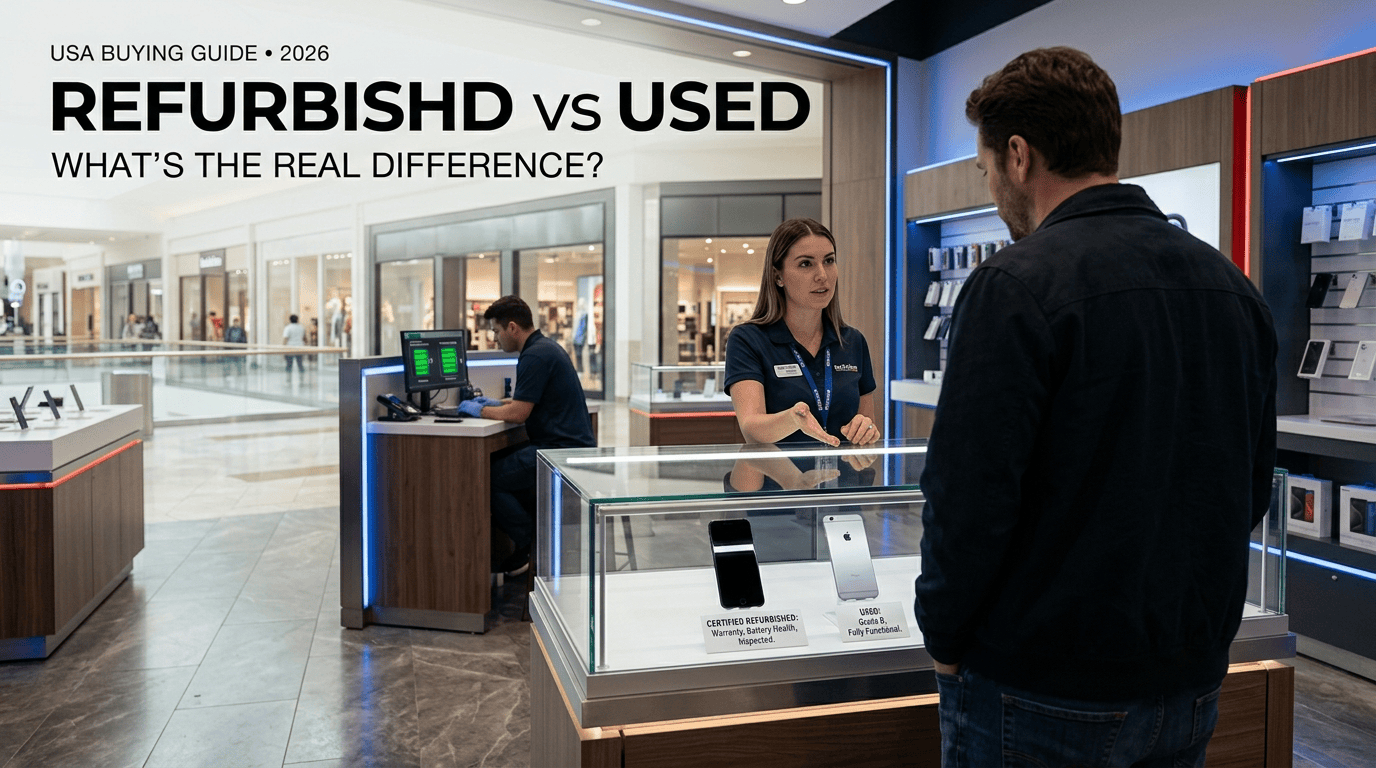
The terms get used interchangeably, but a refurbished phone is not simply a used phone that has been wiped down. In the US phone market, “used” and “refurbished” describe two different levels of accountability, testing, and buyer protection.
A used phone is usually sold as-is by the previous owner or a reseller. A refurbished phone has been inspected, repaired, tested, and cleaned before being listed for sale. That difference matters because it affects warranty coverage, battery condition, return rights, and the risk of hidden problems.
A used phone is exactly what it sounds like: a phone that someone previously owned and is now selling in its current condition. It may be in excellent shape, or it may have a weak battery, scratches, a failing charging port, or an unpaid device balance.
Used phones are commonly sold through:
In many private sales, the seller may not be able to fully verify the phone’s history. The device might still be tied to an iCloud or Google account, it might be carrier-locked, or it might have an outstanding financing balance. A factory reset does not remove an activation lock, and it does not clear a carrier blacklist.
None of this means used phones are automatically bad. A well-cared-for used phone from a trustworthy seller can be a good value. But the buyer carries most of the responsibility for checking the phone before handing over money.
A refurbished phone is a pre-owned phone that has gone through a professional reconditioning process. The exact process varies by seller, but it usually includes:
The key idea is that a refurbisher is not just passing along a phone. The refurbisher is taking responsibility for making sure the phone works before selling it.
That said, not all refurbished phones are equal. Some sellers do only a quick visual check and call it refurbished. Others, especially manufacturers and major retailers, have detailed multi-point inspection processes.
“Certified refurbished” sounds like a strict legal standard, but it is not a single government-regulated term. It means the phone has gone through a specific refurbishment program run by a manufacturer, carrier, or retailer. The program sets its own quality requirements.
In practice, certified refurbished phones usually include:
Examples of well-known certified programs in the US include:
A “certified refurbished” phone is generally the safest type of refurbished phone to buy, but the buyer should still read the specific warranty and return policy.
| Factor | Used Phone | Refurbished Phone |
|---|---|---|
| Inspection | Usually none or seller-described | Professional multi-point inspection |
| Repairs | Sold as-is | Defective parts repaired or replaced |
| Cosmetic condition | Varies widely | Graded and described |
| Battery health | Unknown unless disclosed | Often minimum capacity or new battery |
| Warranty | Usually none | 90 days to 1 year, depending on seller |
| Return policy | Depends on platform or seller | Usually included |
| Price | Usually lower | Usually higher |
| Buyer risk | Higher | Lower, especially from certified programs |
A used phone can be cheaper because there is no labor, testing, or warranty cost built into the price. A refurbished phone costs more because the seller is accepting more responsibility.
Refurbishers often grade phones by cosmetic condition. The problem is that grading is not standardized across the industry. One seller’s Grade A may be another seller’s Grade B.
Still, the grades generally follow a similar pattern:
| Grade | Typical Cosmetic Condition |
|---|---|
| A | Near-mint. Very light or no visible wear. Screen and body look almost new. |
| B | Light scratches, scuffs, or small dents. Screen is in good shape. No cracks. |
| C | Noticeable wear, deeper scratches, scuffs, or dents. Still functional, but clearly used. |
The grade usually refers to the outside condition, not the battery or internal function. A Grade B phone can have a better battery than a Grade A phone. Always ask the seller for actual photos and, when possible, the battery health.
Battery condition is the biggest hidden cost in both used and refurbished phones. Lithium-ion batteries lose capacity over time. A phone that looks perfect may still need a battery replacement.
For iPhones, you can check battery health in:
Settings > Battery > Battery Health & Charging
The maximum capacity percentage tells you how much charge the battery can hold compared with when it was new. A phone below 80% capacity is generally considered degraded and may not deliver full performance.
Many reputable refurbishers state a minimum battery capacity in the listing. Some replace the battery if it falls below that minimum. Apple and Samsung certified programs typically include a new battery.
With a used phone, the seller may not know the battery health or may not disclose it. That can turn a cheap phone into an expensive one if the battery needs replacement soon after purchase.
Warranty coverage is one of the clearest differences between used and refurbished phones.
A private used phone sale usually has no warranty. If the phone stops working a week after you buy it, you may have no recourse unless the platform offers buyer protection for an item not as described. Even then, buyer protection generally covers the transaction, not long-term reliability.
A refurbished phone normally includes a warranty or return window. The length depends on the seller:
Before buying, read the warranty policy carefully. Know how long you have to return the phone and what the warranty covers.
In the US, a phone’s network status matters as much as its physical condition. Three issues can make a used or refurbished phone unusable:
A carrier-locked phone only works on the network it was originally locked to. An unlocked phone can work on compatible carriers. If you buy a phone locked to a carrier you do not use, you may not be able to activate it.
If a phone was reported lost or stolen, or if the original owner stopped making payments, the carrier may blacklist the IMEI. A blacklisted phone cannot be activated on many US networks. You can check the IMEI or ESN with the carrier or through a reliable online checker before buying.
Activation lock protects iPhones through iCloud and many Android phones through Google’s Factory Reset Protection. If the previous owner’s account is still linked, a factory reset will not remove the lock. The phone will be unusable until the owner removes the account. Always ask the seller to remove activation lock before shipping.
These issues are less common from major refurbishment programs because the refurbisher should clear the device before listing. They are more common in private used sales.
The safest sources for refurbished phones are usually:
For used phones, the most common sources are:
Used phone marketplaces often provide some buyer protection, but the phone itself usually is not backed by a warranty. A private sale may have no protection at all.
Whether you choose used or refurbished, these steps reduce the risk of a bad purchase.
No. A used phone is sold in its current condition, often as-is. A refurbished phone has been inspected, tested, repaired, and cleaned by a professional seller and usually includes a warranty or return period.
Certified refurbished means the phone went through a specific refurbishment program run by a manufacturer, carrier, or retailer. The program sets its own testing and warranty standards. Certification is not a universal legal standard, so the buyer should read the seller’s policy.
Refurbished phones from reputable manufacturer, carrier, or retailer programs are generally safe to buy. They usually include testing, a warranty, and a return policy. The safest options are manufacturer certified programs like Apple Certified Refurbished or Samsung Certified Renewed.
Some do, but not all. Apple and Samsung certified programs typically include a new battery. Other refurbishers may only guarantee a minimum battery capacity, such as 80% or 85%. Check the listing before buying.
Yes. Many used phones are still locked to the original carrier. If you need to use a different carrier, make sure the phone is unlocked or compatible with your network before buying.
It varies. Some warranties last 90 days, while manufacturer certified programs often offer one year. Read the specific warranty terms before purchasing.
A refurbished phone is often worth the extra cost over a used phone because of the testing, battery condition, and warranty. If the price difference is small, the buyer protection alone can make refurbished the better choice.
The real difference between a used phone and a refurbished phone is accountability. A used phone puts the burden on the buyer to verify condition, battery health, and network status. A refurbished phone transfers much of that burden to a seller who has tested the device and stands behind it with a warranty or return policy.
If you are comfortable checking an IMEI, confirming activation lock, and accepting the risk, a used phone can save money. If you want fewer surprises and a safer purchase, a certified refurbished phone is usually worth the higher price.


