


Used Earbuds and Smartwatches: What to Check Before Buying
Account locks, worn cells, and convincing counterfeits. The checks that matter before buying used earbuds or a smartwatch, and what can't be fixed later.
Read More


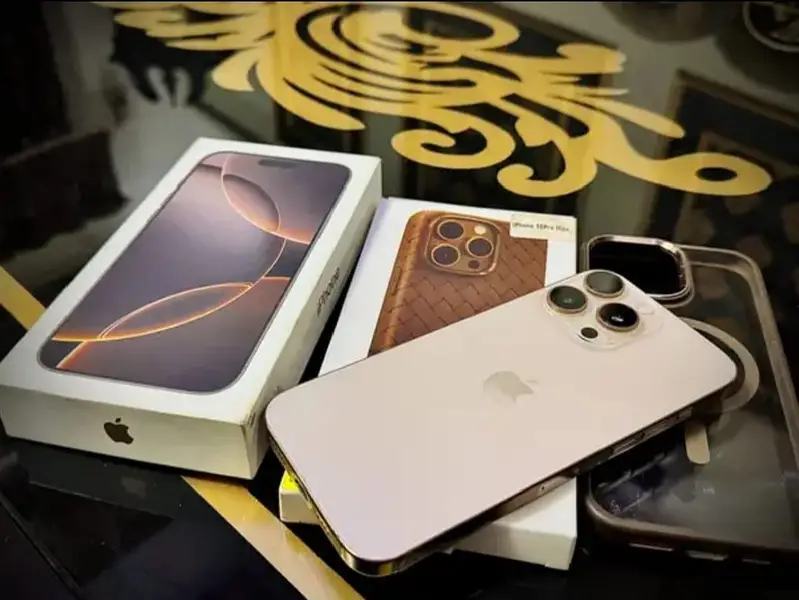
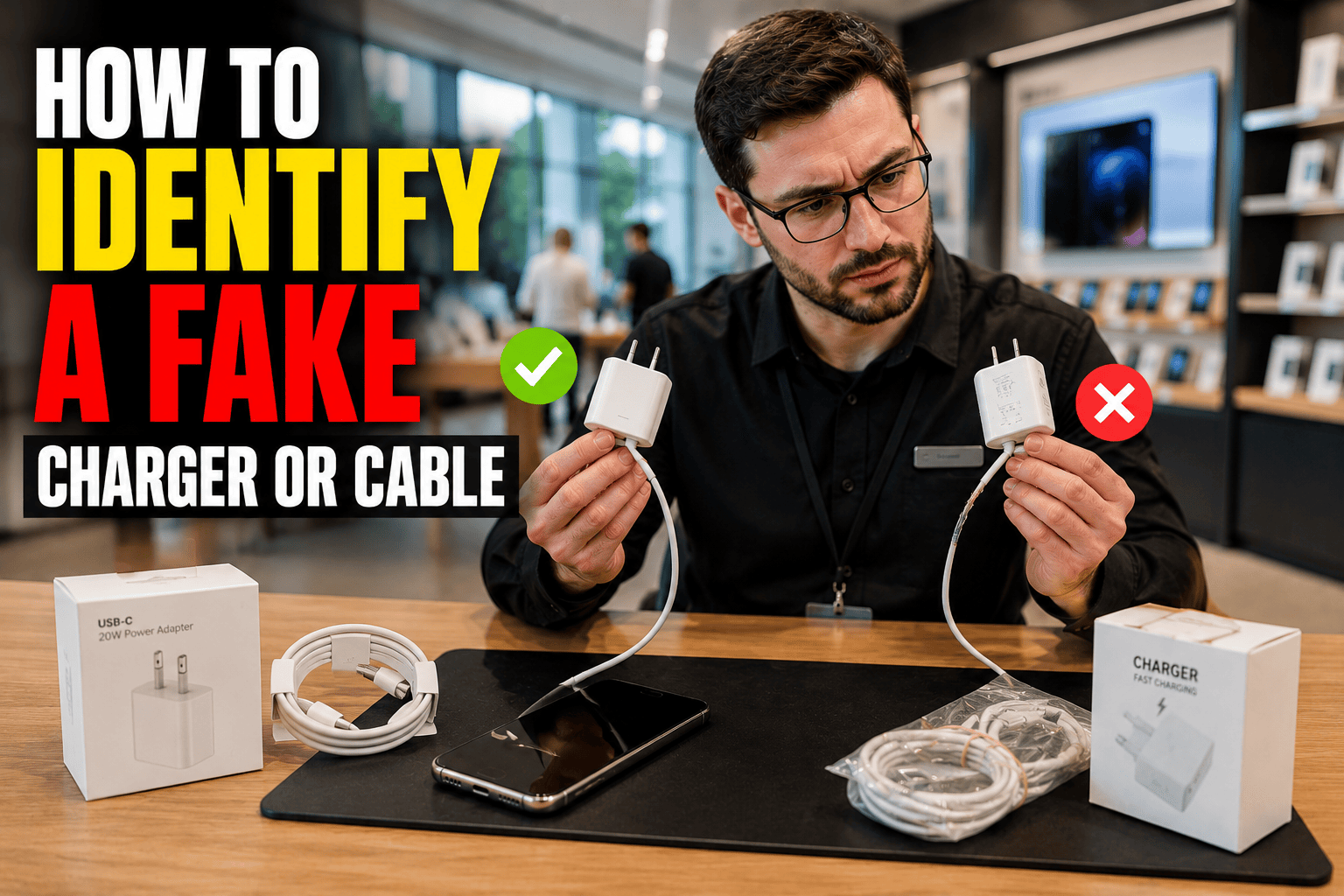
A buyer picked up a phone with a charger and cable included, described as original. The phone was genuine. The adapter weighed noticeably less than the one he already owned, and when he compared them side by side, the printed text on the fake was very slightly bolder and sat a fraction closer to the edge.
Small differences. The one that isn’t small is inside, where a genuine adapter maintains a physical separation between mains voltage and the low-voltage output your phone touches, and where counterfeits routinely economise.
This is the accessory category where the downside isn’t a wasted purchase. It’s a wasted phone, or worse.
A charger’s job is to take household mains voltage and produce a few volts, while guaranteeing that the two never meet. That guarantee lives in a transformer, insulation barriers, and clearance distances between components on the board — all invisible from outside, all costly, and all the first things removed when a factory is competing on price.
The failure modes follow from that. A counterfeit that fails can put mains voltage where it shouldn’t be, overheat, or deliver unregulated output that damages the phone’s charging circuitry. Consumer safety bodies that have tested seized counterfeit adapters have repeatedly found them failing basic electrical isolation requirements.
Cables are lower-stakes but not harmless. A cable that can’t handle the current it claims heats up, and a poorly made USB-C cable can, in the worst designs, deliver power incorrectly.
Work through these in order. Most fakes fail two or three.
Weight. The most reliable single check. Genuine adapters contain a transformer, capacitors, and shielding, all of which weigh something. Counterfeits feel hollow. If you have a known-genuine adapter of the same model, hold one in each hand — the difference is usually obvious.
Pin quality. Look at the prongs. Genuine pins are solidly made, sit precisely, and have a consistent finish. Fakes often use thinner, shinier plated metal that flexes slightly. On folding designs, the hinge on a genuine unit moves with resistance and locks cleanly; counterfeits feel loose.
Moulding and seams. Run a fingernail around the join. Genuine casings are tight with clean, even seams. Counterfeits show slight steps, flash left from the mould, or a seam you can catch.
Printed text. Compare font weight, spacing, and alignment. Counterfeit printing is often marginally bolder, slightly misaligned, or positioned a fraction off from genuine units. Check for spelling errors in the small print, which remain surprisingly common.
The specification itself. Read the stated output and ask whether it’s physically plausible for the size. A tiny adapter claiming very high wattage is claiming something that requires components larger than its own casing.
Model and serial markings. Genuine adapters carry model numbers and regulatory identifiers. Missing markings, or markings that don’t correspond to any real product, are conclusive.
Not all marks carry equal weight, and this trips people up.
Marks requiring independent testing — such as those from recognised safety testing laboratories — mean a sample was submitted, tested, and certified. These are meaningful, and counterfeiting them is a separate offence that adds risk for the counterfeiter.
Self-declared marks are a manufacturer’s own assertion that a product meets a standard. No independent body verified anything. A self-declared mark on a genuine product from a real company is fine; on an anonymous product it tells you nothing at all, because the assertion is being made by the same people who made the counterfeit.
The practical rule: a mark is evidence about a manufacturer you can identify, and noise on a product with no identifiable manufacturer.
Look for the manufacturer’s certification programme. Apple’s programme for third-party Lightning and USB-C accessories puts an authentication chip in certified cables. Uncertified ones trigger a message on the phone saying the accessory may not be supported, and can lose functionality after a software update. That on-screen message is the phone telling you what it found.
USB-C cables and the e-marker. This is the technical check most people don’t know. Cables rated above 60W are required to carry an e-marker chip that tells the charger and device what the cable can handle. A cable claiming 100W or 240W without one either won’t deliver that power or, in badly made examples, will attempt to and heat up.
You can’t see an e-marker, but you can infer. A very cheap, very thin cable claiming very high wattage is claiming something that requires a chip the price doesn’t allow for.
Physical construction. Genuine cables have substantial strain relief where the cable meets each connector, consistent connector moulding, and a certain stiffness from proper conductor gauge. Fakes are thin, light, and flexible in a floppy way.
Connector fit. A genuine connector seats with a small, definite click or resistance. Counterfeits are often loose or too tight.
If you want certainty rather than inference, two options.
A USB power meter sits between the charger and the phone and reports actual volts and amps. Inexpensive, and it turns a claim into a measurement. A charger advertised at high wattage that delivers a fraction of it has answered the question.
The phone’s own estimate. Less precise but free. Plug in at a known battery level and check the estimated time to full. A phone that should fast-charge and reports several hours is not being fast-charged, whatever the adapter says.
Understanding the supply helps you predict where you’ll meet them.
Bundled with used phones, as covered above, and usually without deception — the seller inherited the situation.
Unbranded listings at implausible prices. A high-wattage adapter at a small fraction of the brand price is telling you something about its components.
Convincing packaging on marketplace listings. Counterfeit boxes have improved considerably, so the packaging is no longer a reliable signal on its own.
Travel purchases and roadside stalls, where you’re buying under time pressure and can’t compare against anything.
The pattern worth internalising: counterfeits congregate where verification is hard and urgency is high. Buying a charger because your phone is at 4% in an unfamiliar city is exactly the situation that produces a bad purchase, which is a reasonable argument for carrying a spare cable you trust.
Worth stating clearly, because the two get conflated and it leads people to overpay.
A counterfeit pretends to be something it isn’t. A third-party product is honestly sold under its own brand, and the good ones are excellent — often better than the manufacturer’s own, with more ports, better efficiency, and smaller housings.
What separates a good third-party manufacturer from an anonymous one is accountability: a real company name, a warranty, a support channel, products submitted for independent safety testing, and a reputation they’d lose by shipping something dangerous.
So the question isn’t “is this the manufacturer’s own charger.” It’s “does anybody’s name attach to this, and would that name suffer if it failed.” An unbranded adapter fails that test regardless of what the packaging claims.
Stop using it, particularly if it’s a mains adapter.
Don’t keep it as a spare “for emergencies” — an emergency is precisely when you’d plug in a charger you haven’t thought about. Don’t pass it on to someone else, and don’t include it when you sell a phone.
Take it to electronics recycling. If it’s a cable rather than an adapter, the stakes are lower, but a cable that can’t deliver its rated current is an ongoing annoyance rather than a spare.
Inspect the accessories separately from the phone, and price them at zero unless you verify them.
The common situation isn’t deception. It’s that the original charger was lost two years ago and replaced with whatever was cheapest at the time, and the seller genuinely believes it’s the original because it came in the box they’ve been keeping it in.
Ask directly whether the charger is the one that shipped with the phone. It’s a reasonable question and the answer is usually honest.
| Check | Genuine | Counterfeit |
|---|---|---|
| Weight in hand | Substantial | Noticeably light |
| Prong finish and rigidity | Solid, precise | Thin, shiny, slight flex |
| Casing seams | Tight and even | Steps, flash, catchable edges |
| Printed text | Crisp, correctly aligned | Bold, offset, occasional errors |
| Model and regulatory markings | Present and verifiable | Missing or invented |
| Stated output vs size | Plausible | Implausibly high for the casing |
| On-device message | None | Accessory-not-supported warnings |
| Measured output | Matches the label | Falls well short |
Every charger you own, you acquired at some point and stopped thinking about. Most people have three or four in a drawer and no idea where two of them came from.
Once, do this: gather them all, weigh them against the one you’re most confident is genuine, and read the printed text on each. It takes a couple of minutes and it usually turns up one you’d rather not use — typically the one bought in a hurry, or the one that arrived bundled with something else.
Then adopt the habit on new arrivals. Any charger that comes into the house with a phone, from a friend, or from an unfamiliar shop gets the weight-and-print check before it goes into rotation. It’s the cheapest safety practice available, and it’s the only one that catches the specific failure this article is about.
Can a fake charger really damage my phone?
Yes. Unregulated or poorly isolated output can damage charging circuitry, and in the worse cases the risk extends beyond the phone. This is the accessory category where the downside is genuinely serious rather than merely disappointing.
What’s the fastest way to tell a fake adapter?
Weight, compared against a known-genuine unit of the same model. Counterfeits feel hollow because they omit components that weigh something.
Does the accessory-not-supported message always mean counterfeit?
Not always — a damaged or dirty connector can trigger it too. But on a cable that’s otherwise fine, it usually means the authentication chip is absent or non-genuine.
Are third-party chargers from known brands safe?
Generally yes. Reputable third-party manufacturers submit products for independent testing and have a business to protect. The risk sits with anonymous products, not with third-party ones as a category.
What is an e-marker and why does it matter?
A chip inside higher-power USB-C cables that reports the cable’s capabilities to the charger and device. Cables claiming high wattage without one can’t safely deliver it.
Is it safe to buy chargers used at all?
From an identifiable brand, yes — there’s no consumable inside a charger. The checks in this article are what separate that from an anonymous unit of unknown origin.
Pick up the charger you’re using right now and weigh it against another one. That single comparison catches most counterfeits, and it takes about five seconds.
Buying a phone with accessories included? Check what’s listed on ExploreFrag, and read our guide to which accessories are safe to buy used before you value the bundle.
Emran Ahmed is the founder and CEO of ExploreFrag, a marketplace for buying and selling used phones and accessories across every brand. He keeps a genuine adapter on his desk purely as a reference weight, which he recognises is a strange thing to admit. He advises every seller to say plainly whether a bundled charger is the original.


