


How to Check Battery Health on iPhone and Android Before Buying
Exact menu paths for iPhone, Pixel, and Samsung, what the percentages mean, and why a used phone reading 100% is sometimes the biggest warning sign of all.
Read More


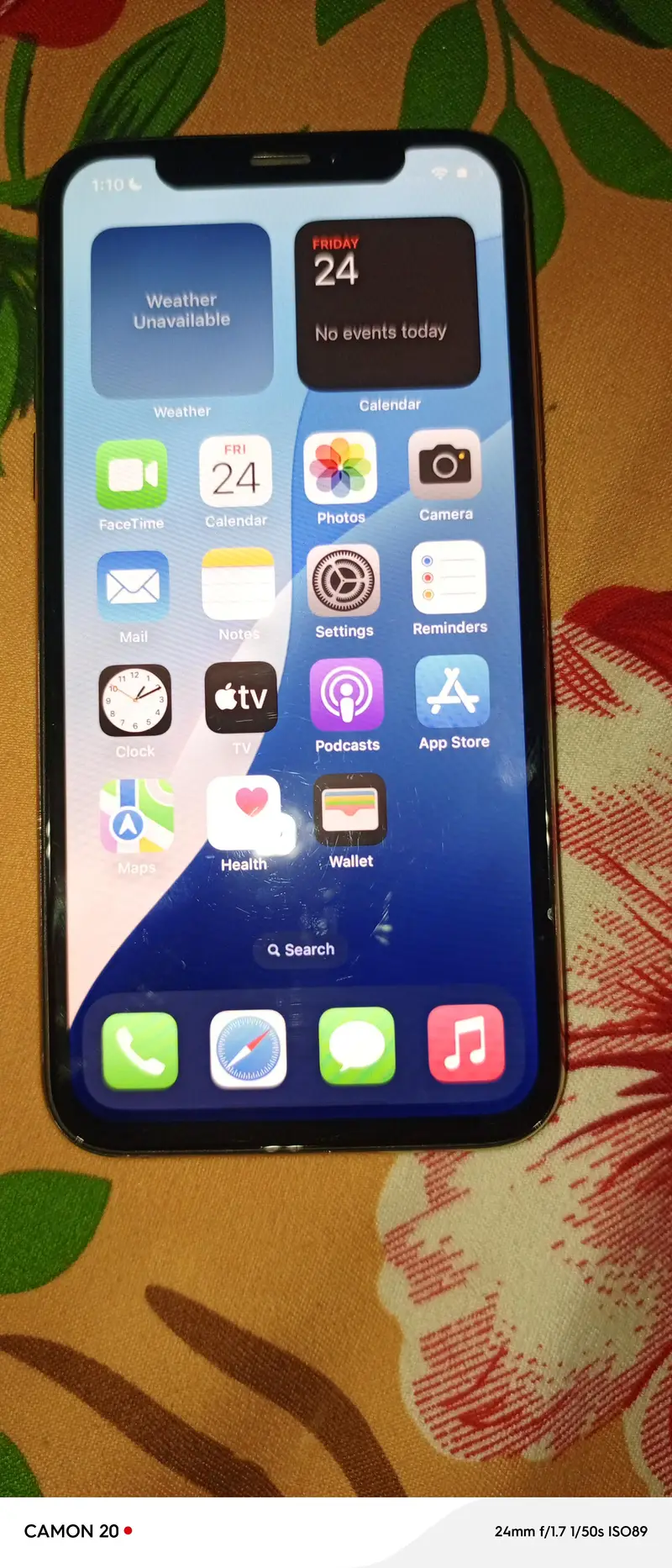

A seller sent a phone to a buyback service graded, by his own honest assessment, as excellent. It came back re-graded two tiers down, with a revised offer roughly two-thirds of the original quote.
He hadn’t lied. He’d used the word “excellent” to mean what it means in English, and the company had used it to mean something specific and narrower that was defined in a document he hadn’t read.
This is the whole problem with condition grades. They look like a standard. They aren’t one.
No regulatory body defines Grade A. No trade association sets the boundary between Good and Fair. Every company that uses these labels writes its own definitions, and those definitions are usually published somewhere in the small print — often at the point where you’re already committed.
The result: a phone with light scratches on the frame might be Grade A at one operation, Grade B at a second, and “Good” at a third, where “Good” is the third tier down rather than a compliment.
Two practical rules follow.
Grades are only comparable within one seller. Comparing a Grade A from one company to a Grade A from another tells you very little.
On peer-to-peer listings, a grade is an opinion. When the individual selling the phone chooses the label, you’re reading their self-assessment, which will be generous. Not dishonest, usually — generous.
With the caveat above firmly in place, here’s the shape most systems share.
| Tier | Common labels | Typical meaning |
|---|---|---|
| Top | Grade A, Pristine, Like New, Excellent | No visible marks at arm’s length. Screen unmarked. Often implies a new battery on refurbished stock |
| Second | Grade B, Good, Very Good | Light scratches on frame or back, visible on inspection but not from normal use distance. Screen clean |
| Third | Grade C, Fair, Acceptable | Obvious cosmetic wear — scuffs, dents, visible screen scratches. Fully functional |
| Bottom | Grade D, Poor, For Parts | Cracks, significant damage, or functional faults. Often sold as non-working |
Notice what varies between systems: whether the top tier requires a new battery, whether screen scratches drop you a tier or two, whether functional faults have their own category or collapse into the bottom one.
Notice also what’s missing from most grades entirely.
This is the part that costs buyers money.
Condition grades describe appearance. They generally say nothing about:
Every one of those affects value more than a scratch does. A Grade A phone with a third-party screen and a battery at 78% is worth less than a Grade C phone with everything original — and no grading system in common use will tell you that.
So treat the grade as one line of a description rather than the description. Our fifteen-point inspection list covers what the grade leaves out.
Four questions that turn a label back into information.
Who assigned it? A certified refurbisher applying a published standard, or the person selling the phone? These are different kinds of claim.
Is the standard published? If yes, read it. It takes two minutes and it’s the difference between the seller’s meaning and yours.
How many tiers are there? “Good” in a four-tier system is the third rung. In a three-tier system it’s the middle. Same word, different position.
Does the grade cover function, or only appearance? Many cover only appearance, with functional faults handled separately or not at all.
Then ignore the answer and look at the photographs, which is what an experienced buyer does anyway.
If you’re selling, the grade you choose determines how many disputes you have and how fast you sell.
Assess it in daylight, from about arm’s length, then again at close range. Two distances, because that’s how buyers will look at it — once in the photos and once at the meetup.
Grade the screen separately from the body. Screen marks bother buyers far more than frame marks, and a phone with a perfect screen and a scuffed frame should be described that way rather than averaged into a single letter.
Assume the buyer will find everything. They will. Anything you round up now becomes a renegotiation later, usually at a worse price than honest description would have produced.
Describe rather than grade, where the platform allows it. “Two small scratches on the left edge, screen unmarked, back glass clean” tells a buyer more than any letter and cannot be disputed. Grades invite argument; specifics don’t.
My honest position: on peer-to-peer sales, skip the letter entirely if you can. Photographs plus a specific written description outperform any grade, because they can’t mean different things to different people.
Almost always in mail-in transactions, and the mechanism is consistent.
You self-assess and receive a quote. You post the phone. The company inspects it against their own definitions and revises the offer. Your options are accepting the new number or paying return postage.
The defence is documentation. Before the phone goes in the box, photograph every surface, the screen powered on, and the dialled IMEI screen, all in one continuous set, and photograph the packing. If the revised grade cites damage that wasn’t there when you sealed the parcel, you have something to say. Without those photos, you have an opinion.
Face-to-face sales rarely produce grading disputes for an obvious reason: both parties are looking at the same phone at the same time.
Useful context, because it explains why their assessment differs from yours.
A typical process runs in four stages.
Functional testing first. Automated or semi-automated checks covering the screen’s touch response, every camera, speakers, microphones, sensors, buttons, charging, and radios. A phone failing any of these is diverted before cosmetics are considered.
Battery threshold. Most operations apply a hard cutoff — below a set health figure, the battery is replaced or the device drops a tier. This is why a top-grade refurbished unit often comes with a new battery while a top-grade private sale doesn’t.
Parts verification. Checking whether components are genuine, since non-genuine parts affect what they can honestly sell and what warranty they can offer.
Cosmetic assessment last, under controlled lighting, against written criteria — usually a specified viewing distance and a maximum scratch length or count.
Two things follow from this. Their grade means more than a private seller’s, because it sits on top of a functional inspection you didn’t perform. And their standards are stricter than everyday language, because they’ve been written down by someone who has to defend them.
Trust the photos.
A grade is one word chosen by someone with an interest in the outcome. Photographs are evidence, provided they’re the right photographs — screen powered on, taken at an angle under light, and covering all four edges. Our listing photography guide covers what a complete set looks like.
If the photos are limited and the grade is generous, that combination is itself information. Ask for the specific shots that are missing: the screen at an angle, each edge individually, and a close-up of anything the description glosses over. A seller who supplies them promptly is confident; one who doesn’t has answered a different question.
And if a listing shows only four photos with the screen off while claiming a top grade, treat the grade as decoration.
A short glossary of terms that carry less meaning than they appear to.
Mint. No agreed definition anywhere. Usually means the seller is pleased with the phone.
Like new. Sometimes a defined refurbisher tier with real criteria; on a private listing, an opinion.
Minor wear / light scratches. The most common phrase in the market and among the least informative. Minor compared to what?
Fully working. Covers a lot of ground, and rarely covers battery health, carrier status, or account locks.
Refurbished. Means five different things depending on who performed it, from a manufacturer rebuild with a new battery to a wipe and a fresh screen protector. We unpack that in our comparison of used, refurbished, and open-box.
No issues. The claim most often contradicted at the meetup, usually not deliberately — sellers stop noticing wear on a phone they’ve handled daily for two years.
None of these words is dishonest. They’re just imprecise, and imprecision in a listing gets converted into a discount by any buyer who has been burned before.
Is there an official phone grading standard?
No. Each company defines its own tiers, which is why identical phones receive different grades from different sellers. Always read the specific definitions where they’re published.
Does Grade A mean the phone is like new?
It usually means cosmetically unmarked at normal viewing distance. Whether it also implies a new battery, genuine parts, or a warranty depends entirely on who is using the term.
What’s the difference between Grade B and Grade C?
Broadly, Grade B is wear you have to look for and Grade C is wear you notice immediately. Where exactly the line falls varies by seller.
Should I grade my own phone when listing it privately?
Prefer specific description and clear photographs. If the platform requires a grade, pick the honest one rather than the flattering one — the difference surfaces at the meetup either way.
Can I appeal a grade I disagree with?
With a mail-in service, only if you documented the phone before posting it. A continuous set of photographs covering every surface, the powered-on screen, and the packing process is the only evidence that carries weight in that conversation.
Why did a buyback service downgrade my phone?
Usually because their published definitions are stricter than everyday usage of the same words. Photograph everything before shipping so you can contest a downgrade that doesn’t match how the phone left you.
How should I describe a phone with a perfect screen but a scuffed frame?
Exactly that way, in words. Averaging the two into a single letter loses the information buyers care about most, since screen condition drives their decision far more than frame wear does.
Do grades mean anything on accessories?
Even less than on phones. For earphones, chargers, and cases, condition claims are rarely defined at all, so photographs and a description of actual use are the only things worth relying on.
Does a cosmetic grade affect price more than battery health?
Rarely. Buyers discount a weak battery and non-genuine parts more heavily than visible scratches, because those affect how the phone works rather than how it looks.
Take your phone to a window, look at it from arm’s length, then from six inches, and write down exactly what you see in each. That description is worth more in a listing than any letter grade, and nobody can dispute it.
Ready to sell? List it on ExploreFrag with photos that match the description — our listing photography guide covers the twelve shots buyers look for.
Emran Ahmed is the founder and CEO of ExploreFrag, a marketplace for buying and selling used phones and accessories across every brand. He has read enough condition descriptions to have concluded that the word “mint” has no fixed meaning anywhere in the English-speaking world. He now advises sellers to describe rather than grade, and buyers to look at photographs rather than letters.


